Pages

Showing posts with label comics. Show all posts

Sunday, August 3, 2014

A Guide to Doing Wonder Woman Justice

StarGazer

        For someone who has barely read any comic books, I’ve spent a lot of time discussing movies based off them. If anyone were to come up to me and say that I’m not qualified to talk about comics and should therefore just stop together, I wouldn’t even put up much of an argument, but the truth is that, for anyone who’s interested in pop culture nowadays, it’s pretty much impossible to avoid talking about Marvel, DC and the like. Geek culture, whether we’re talking about comic books or Star Trek or A Song of Ice and Fire, is no longer a niche; in fact, it’s now not only mainstream, but so dominant that it has redefined the entertainment industry, shifting perceptions of what projects are capable of finding an audience and lending greater weight to pure hype and fan anticipation in marketing. While some protectiveness is understandable, given that people always feel a bit of ownership over the things they love, this expansion and diversification of audience means “original” fans need to accept that not everyone is going to approach their favorite characters and stories in the same way and that they no longer get to be the sole authorities on what works and what doesn’t. Superheroes aren’t confined to comics anymore, so why should their fans be? Frankly, if someone can’t appreciate or understand a movie without reading the source material, then the movie probably wasn’t that good to begin with.

        All of this is to say that, despite having little interest in delving into the comics they’re based on, I feel oddly fascinated by and invested in superhero films. It’s a genre exploding with exciting potential, most of which Hollywood frustratingly has yet to explore, and with characters and narratives that can reach mythological proportions,  they tap into current societal anxieties and obsessions in a way that realistic/literary drama never could. However, as cliché as the mantra has become, with great power comes great responsibility. Now that these movies have gained widespread popularity and a level of respectability, they can’t be dismissed as escapist fluff anymore, even if that attitude remains prevalent amongst both fans and critics. The stories they tell, the people they portray and the issues they’re willing to confront – and, perhaps more importantly, how they do all these things – matter.

        And that’s why, even to a comic book n00b like me, the announcement that Wonder Woman was going to be included in the upcoming Man of Steel sequel and the more recent unveilings of her casting and costume were a really big deal. It’s not just that she’s somehow never been in a live-action feature film before, despite being one of the most iconic superheroes ever. As a well-known female superhero, that rarest of entities, she has the power to singlehandedly either transform the comic book movie industry by convincing studios and creators to finally take the women in the audience seriously or indefinitely shut down any chance we have of improving female representation in blockbusters. Fairly or not, Batman V. Superman: Dawn of Justice will essentially sink or swim based on its portrayal of Diana.
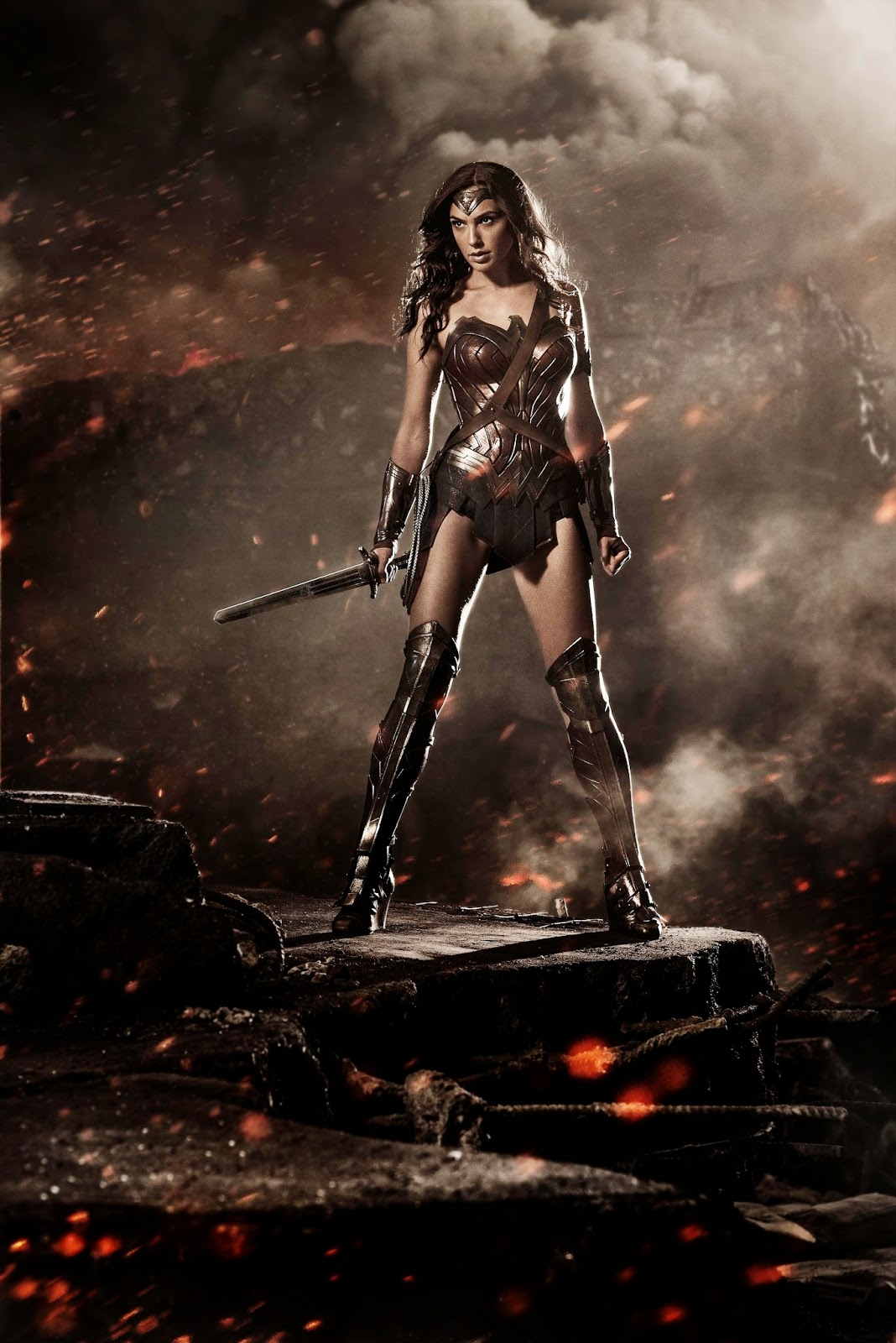


Wonder Woman preparing to stab whoever thought of that movie title

Wednesday, June 26, 2013

Welcome to the Age of Not-So-Super Heroes

WordMaster

***BE WARNED: MAJOR SPOILERS AHEAD FOR MAN OF STEEL, IRON MAN 3 AND CHRONICLE***

            For someone who’s never read a Superman comic or seen any of the dozens of previous TV and film incarnations of the character, I have a lot to say about Man of Steel. I walked into the theater with no real expectations, aside from what I’d heard about the movie’s possible feminist credentials; I’d only agreed to see it in the first place because a few friends wanted to see it, and I always like to be able to form my own opinions, even if those opinions cost $10 a piece. At the very least, I thought, Amy Adams should be a kick-ass Lois Lane, right?

            As it turned out, no. Wrong. Bare-minimum expectations not met. I walked out the theater fuming about the money I’d wasted, which is saying a lot (you’re talking to someone who saw Journey to the Center of the Earth – yes, the one with Brendan Fraser – and The Green Hornet in theaters and had no overwhelming feelings of regret), and struggling to suppress my urge to burst into a needlessly vehement rant like the guy sitting in front of me did to his amused buddies. If I felt betrayed, I could only imagine how someone who actually gave a damn about Superman felt, the countless people who looked forward to this movie the way I looked forward to The Dark Knight Rises.

            It’s a shame because, despite my hatred of Zack Snyder as a director and my indifference to Superman as a character, I genuinely wanted Man of Steel to be good. The dueling teaser trailers got my hopes up with their stark, poignant imagery and refreshing lack of in-your-face CGI; maybe, I thought, Snyder had finally ditched the irritating gimmicks that his previous movies unbearable (the fucking slow-mo and fast-mo in that train scene in Sucker Punch… rrrrrargh!!). Even after 75 years of comic books, radio broadcasts, television serials and feature-length films, it’s clear that Superman still resonates with people, contrary to the popular belief suggesting that his sunny idealism has become irrelevant in our age of antiheroes. In theory, Man of Steel presented a clean slate for the icon, unbound by obligations to follow the continuity of past cinematic efforts and allowing the filmmakers to remodel him for modern sensibilities. In theory, Henry Cavill and Amy Adams seem like spot-on casting choices, with his chiseled, hyper-masculine good looks and her down-to-earth feistiness. In theory, a Christopher Nolan-influenced version of the story, full of post-9/11 angst and moral ambiguity, could have worked.

Thursday, August 2, 2012

The Golden Age of Superheroes

WordMaster        

           At one point during Joss Whedon’s mega-blockbuster The Avengers, Nick Fury muses that heroes are “an old-fashioned notion”. Indeed, after the Cold War, Watergate, 9/11 and dozens of other scandals, controversies and tragedies, the idea of superheroes – extraordinary individuals who combat evildoers and protect their societies with the help of a secret identity – seems hopelessly naïve. Even as we admire the physical and moral qualities of superheroes, we can’t quite get rid of that thought nagging at the back of our minds: why should we put the safety of the community, if not the entire world, in the hands of a guy dressed in spandex tights, who is just as fallible as the rest of us? The whole idea isn’t inspiring so much as ridiculous and more than a little elitist. 

            So, it seems paradoxical to say that 2012, a year that has seen the U.S. mired in seemingly endless economic turmoil and an already-tiresome presidential campaign, represents the Golden Age of superhero movies. The 21st century has been largely defined by cynicism, bitterness and gloom, yet never has the superhero genre, one almost relentless in its romanticism and naiveté, been so popular, so mainstream. And to cap it all off, this year – this summer, to be more specific – heralded the release of three of the most eagerly anticipated superhero movies in history, a holy triumvirate that brought a decade-long struggle for acceptance to its rousing (and lucrative) climax: The Avengers, The Amazing Spider-Man and, at long last, The Dark Knight Rises. What’s remarkable about these films is not the overwhelming hype leading up to them or their inevitable annihilation of the box office but the fact that collectively, they showcase everything that superhero movies are capable of, embracing the genre’s tropes while also pushing its boundaries in subtle and exciting ways. Enjoy this, fellow moviegoers: we’re witnessing the end of an era, a genre at its best, and more likely than not, we’ll never see anything like it again.

Friday, July 20, 2012

The Unnecessary (?) Spider-Man

WordMaster         

          If you’ve read the review I posted last week, you should know that I enjoyed Marc Webb’s The Amazing Spider-Man quite a bit. With its spirited action sequences, tender/awkward romance and a near-brilliant lead performance by Andrew Garfield, the movie represents the beginning of a promising new franchise, as it (re)introduces the world to a complex, engaging protagonist and leaves plenty of room for plot and character development in the inevitable sequels.

 God, they're adorable together.

Of course, not everyone agrees with me. The film currently has a 74% rating on Rotten Tomatoes, barely fresh, and critical reviews range from glowing and pleasantly surprised to lukewarm and even downright hostile. I could go through each of the critiques presented in these reviews separately and discuss why I agree with them or why they leave me speechless with bafflement and/or irrational resentment (who is Roger Moore and why does Rotten Tomatoes list him as a “top critic”?), but in the end, they all pretty much boil down to one overarching theme: that, regardless of how much effort the film-makers put into the movie or whatever small virtues it may have, it simply has no reason to exist. It’s the embodiment of everything wrong with Hollywood nowadays, a lazy, pointless bid for cash that apparently has less imagination than the Transformers movies.

Monday, July 16, 2012

The Not-So-Itsy Spider (No, Not Spider-man)


         One word: Black Widow. So two words, actually.

           I’ve read mixed reactions to Scarlett Johansson’s part in Marvel’s latest orgasm of property damage, and after hours of thought-provoking research and hours of less thought-provoking tumblr, I’m ready to weigh in. The two sides of the argument, to the best of my research and exposition skills, are as follows: one camp seems to believe that Black Widow was portrayed in a tasteful, respectful, and well-developed way; the other holds that she’s the latest victim in Hollywood’s longstanding infatuation with sexism and superheroes. And then some people didn’t seem to notice she existed at all.  

           If you go through a lot of the Avengers comments, you’ll find some recurrent themes. More often than not, Black Widow’s character is mentioned in passing as a (female) master assassin; and then they go on to talk about characters that are more interesting (ie have more penis). When she is given some actual ink on the page, chances are that the majority of it will be dedicated to how hot she looks in leather. Because as soon as a woman steps onto the screen, audiences (and specifically male audiences, let’s not sugarcoat this) are conditioned to first see them in a sexual light. Decades of introducing women with slow body pan ups has helped see to that.

            Just look at this review at the New Yorker, where the critic decided that “Black Widow repels invading aliens through the sheer force of her corsetry.” Yeah, because her guns and combat training and intelligence and courage had nothing to do with it.


BITCH PLEASE

Wednesday, February 22, 2012

Gerd Pride

        CE Jenkins

           I love being a nerd. It’s great. Normally whenever someone gets so obsessed with something that they don a weird costume and camp out on a sidewalk for 48 hours the next logical step is a restraining order; but flash your nerd ID badge, and behavior that some would consider psychopathic becomes merely creepy. It’s like belonging to a cult, in a way; you wear costumes, speak in tongues, and convene regularly for sacred meetings at the local GameStop. And sometimes it’s all I want in the world to just get the nerdiest t-shirt I can find and plaster that logo across my chest. But thanks to the help of numerous t-shirt websites, that simple goal is a lot harder than it sounds.

          It seems like a lot of retailers are unaware of the existence of female fans. Nerdiness has always been characterized as a guy thing—I say nerd, and you probably think of a spindly dude with centimeter-thick glasses and a pocket protector. People refer generically to “fanboys”, assuming that the ladies are too busy making sandwiches to be interested in pop culture. But lately that stereotype has gotten more and more outdated, as women have taken their place alongside their male comrades in headshotting all the pathetic n00bs and storming all the conventions. Unfortunately, the media and its outlets have done little to realize this new world.

          For one, it is nearly impossible to get good merch (specifically t-shirts, because most everything else is gender-neutral). I am a chick and have the body to prove it. I don’t want to have to get by with throwing a small guy’s-cut shirt in the wash 5 times so it doesn’t look like I’m wearing a sack. Beyond that, getting nerdy girls clothing is a pain in the ass for a bunch of other reasons:

1.      Expense. For plenty of online retailers such as J!NX and ThinkGeek (both of which I love in spite of this), a woman’s shirt costs around 2-3 dollars more than a guy’s, and uses less fabric. That might not seem like a lot, but think of it this way: with the money you’d save on 3 t-shirts, you could go down to Wal-Mart and buy an Iron Man DvD.

2.      Material. The stuff they make some women’s t-shirts out of is so flimsy. Maybe they think it will stretch over our boobs better, as opposed to not ripping in half when you pull it off the hanger.

3.      Availability. I went to Adventure Island one time, and they had like 3 different comic book shops in their Marvel area. It was totally awesome, except for the fact that the only women’s t-shirts they carried all said something to the effect of “I only date superheros” or “my boyfriend has iron abs, literally!” I might find that sort of thing vapid and mildly sexist, but that’s just an opinion and I have no problem with people who do wear those shirts. I do have a problem with the manufacturers who think that the only kind of t-shirts female nerds want to wear are ones that lock them into the role of a girly sex object. Some of us actually want to wear Cap’s insignia emblazoned on our chest without the subtext implication that we’ll be banging him later on.

          The bias goes beyond the apparel section. Walk into any comic book store and flip through the covers; I’ll bet that one thing you won’t be wanting for is a plethora of unnaturally large breasts. Sometimes it seems like the majority of women in comic books have a rack comparable to if Christina Hendrix’s boobs had twins fathered by a watermelon. And on top of that they dress these characters up in skimpy outfits that are very rarely practical for punching a bad guy’s face in. Take Wonder Woman's costume, for example. I highly doubt that a nip slip is something you want to worry about while trying not to be incinerated by a death ray. Not to mention all those spinebreaking poses to show tits and ass at the same time. Seriously artists, I know proper anatomy is for losers and all but our bodies don’t actually bend that way. The problem isn't that comic book women tend to have large breasts and skimpy clothing, because there's nothing inherently sexist about that; it's that they're being exploited for their sexuality, treated merely as eye candy for an audience with a serious sweet-tooth. 

          The issues are more than just skin deep; whether it’s because many comic book authors are dudes with no clue how to write a woman, or because they think their readers have no interest in such things, strong female personalities are in short supply. Granted, there are some good ones as well: Kitty Pryde, Wonder Woman, and Barbara Gordon to name a few. But for every good female character there are a plethora of poorly written, underdeveloped, overly-sexualized ones to boot. There’s also the “women in refrigerators” conundrum, which describes the way many female characters are often ruthlessly punished or treated as plot devices to spur their manly men to action.

          One root of this problem is that the comic book industries keep assuming that their audience is composed entirely of straight dudes. There is some truth to that, of course; many women-centric comics don’t sell as well as their male-centric counterparts, and the fanbase has been an unequivocal sausagefest in the past. What I don’t understand is how alienating 50% of the population with over-sexualized and internally flawed characters is a good marketing strategy. Many women can be and already are interested in comics, and the industry could make a buttload of money off of them if they would only make more of an effort to be less gender-biased.

          Funny how whining about finding the right t-shirt size can lead to a feminist critique of the comic book industry.