Pages

Showing posts with label feminism. Show all posts

Friday, May 22, 2015

How Mad Max: Fury Road Succeeds by Embracing Genre

WordMaster

            Blessed is she or he who watches Mad Max: Fury Road and can write coherently about it. The latest entry in George Miller’s gasoline-fueled, apocalyptic series unfolds as a fever dream, an extended action sequence so relentlessly kinetic that the few periods of quiet and stillness feel downright unsettling. Even now, I’m not entirely convinced this is a real film that I experienced while conscious, let alone one that’s legitimately good.

            By all rights, a movie involving an electric guitar that literally spews fire should fall into the “guilty pleasure” category at best; to tell the truth, there were a couple times when I wasn’t quite sure if I was laughing with or at it. Yet this eagerness to revel in the ridiculous is ultimately why it works, along with the abundance of distinct female characters; the quietly riveting performances from lead actors Tom Hardy, Charlize Theron and Nicholas Hoult; and the mind-blowing commitment to practical effects over digital trickery.


If stuff like this doesn’t make you appreciate stuntmen and women, you’re hopeless.

I tend to be skeptical of the idea that there’s inherent value in deliberately over-the-top art. White House Down may be aware of its stupidity, but that doesn’t make it any less stupid or more fun to watch. Fury Road, however, is not over-the-top just for the sake of being over-the-top. As a friend of mine pointed out, it’s highly interested in exploring the concept of madness, on both an individual level (see: the main character’s name) and a societal level (the dystopian community led by villain, Immortan Joe, revolves around a manipulative cult). The first ten or so minutes put us directly in Mad Max’s head, using various aesthetic techniques, such as rapid edits and sped-up motion, to produce a sense of mania and disorientation. As a whole, the exquisitely grotesque production design effectively captures a world in disarray, where there are no rules and nothing makes sense.

            At a time when Hollywood churns out big-budget spectacles like assembly-line products, the passion of Fury Road feels not only refreshing but vital. Here is an action movie that unabashedly adores action, staging scenes of destruction and mayhem with the mischievous glee of a kid experimenting with fireworks. Explosions, shootouts and armored cars collide in a frenzied, hypnotic ballet, set to the grand, cacophonous score of Dutch instrumentalist Junkie XL. It’s light-years away from the self-conscious irony of such flicks as 21 Jump Street and Guardians of the Galaxy, which seem faintly embarrassed by their own existence, and the slick yet soulless tedium that plagues so many tent-poles, like The Amazing Spider-Man, whose novice director Marc Webb was clearly more interested in making a sweet romance than the flashy extravaganza he was obligated to deliver.

Tuesday, March 24, 2015

Mission: Impossible – Conquering the Smurfette Principle

StarGazer

        The full-length trailer for the fifth Mission: Impossible movie, now sporting the not-at-all-laughable subtitle of Rogue Nation (at least it’s not Dawn of Justice or Ragnarok?), popped up online Monday, and the world got yet another opportunity to gawk at Tom Cruise’s commitment to jaw-dropping and likely ill-advised stunts with a mixture of bemusement, exasperation and awe. While I have little doubt that the film’s action scenes will be thrilling, an ideal spectacle for blockbuster season, I would be infinitely more interested in it if 1) Mission: Impossible – Ghost Protocol helmer Brad Bird returned to the directing chair and 2) more importantly, if Paula Patton were not conspicuously absent from this sequel, while Cruise, Jeremy Renner, Simon Pegg and Ving Rhames will all reprise their roles.

        Even if it is for harmless scheduling reasons, this means we have yet another major movie boasting a single major female character (newcomer Rebecca Ferguson) in an ensemble otherwise consisting of all guys. Yes, we’re talking about an action franchise whose primary draw has always been its over-the-top gadgets and stunt work, so it’s obviously not surprising that Rogue Nation, at least based off the trailer, will be extremely dude-centric. However, this tokenism and the trailer’s heavy use of the male gaze suggest that the movie and, by extension, the franchise as a whole, isn’t especially interested in women – either in terms of portraying them as more than eye candy or in attracting us as an audience.
  

I couldn’t get a non-blurry screengrab, but in case you’re wondering, Rebecca Ferguson is about to snap this guy’s neck with her legs, and I’m so here for that.


 This, not so much.

Tuesday, February 17, 2015

How "Arrow" Empowered the Damsel-in-Distress

StarGazer

        It’s no secret that The CW, oft overlooked because it lacks the artistic edge and money to garner the prestige of cable yet is too niche to commercially compete with the “Big Four” broadcast networks, is telling some of the best superhero stories in any medium right now. After a promising yet uneven freshman season, Arrow found its voice in a confident, entertaining and emotionally compelling second season, and its spin-off show The Flash already brimmed with energy when it debuted this past fall.

        Though the two shows are tonally disparate (The Flash is bouncy and at times proudly cheesy, while Arrow’s brooding darkness is more reminiscent of Christopher Nolan’s Batman films), they work well together, as evidenced by a pair of delightful crossover episodes that aired in December. Not only do they share a creative team, anchored by creator Greg Berlanti, but they also succeed for many of the same reasons: talented, charismatic actors; sharp yet understated visual flair combined with efficient pacing; and perhaps most importantly, plots driven by characters and their relationships to each other rather than by MacGuffins or convoluted mythology. In a way, they benefit from not having the enormous budgets given to big-screen ventures, because they’re forced to employ action in the service of story instead of the other way around, and even the set pieces, of which there are still plenty, dazzle more through impressive choreography and stunt work than expensive CGI effects, particularly in Arrow. They suggest that comic books, with their installment-based structure, love of twists and cliffhangers and sprawling ensembles of characters, are much better suited to TV than film, where even the best adaptations still often feel cumbersome and incomplete.


 Watch and learn, Avengers. Watch and learn.

        Though both shows readily embrace their comic book origins, Arrow especially spends a lot of time playing with various stock plot and character tropes. There’s the brooding, traumatized hero, the loyal sidekick, the tech support, the protégé, and various villains and fridged characters (usually women) that primarily serve as, respectively, obstacles for conflict and motivation for the hero. Of course, the writers are good enough that all of these characters eventually become much more layered and interesting than a simple description suggests, but for the most part, they don’t radically depart from the superhero action genre’s conventions. While David Ramsey’s pragmatic, no-nonsense John Diggle and Emily Bett Rickard’s Felicity Smoak, who has evolved into the show’s moral center, have always probably been my favorite characters, the most fascinating and thoughtful narrative arc throughout the series so far belongs not to them or hero Oliver Queen, but rather to resident token love interest Laurel Lance, who’s played by a very game Katie Cassidy.

Thursday, January 8, 2015

In the Wild

WordMaster


At first glance, it’s easy to dismiss Wild, Jean-Marc Vallée’s adaptation of the 2012 Cheryl Strayed memoir, as schmaltzy inspiration porn – Eat, Pray, Walk, someone on my Twitter timeline joked derisively. It is, after all, the true-life story of a not-destitute white woman who embarks on a journey of self-discovery, the kind of didactic, feel-good confection that awards bodies gobble up like chips, ostensibly serving little purpose other than to provide its star performer with an opportunity to do Real Acting and gain some positive PR along the way. Frankly, as someone who nurses a deep-seated, perhaps irrational bias against biopics (anything revolving around a specific historical or living figure, really), I approached Wild with a certain skepticism, the way many critics seem to regard superhero or Hobbit movies, steeling myself for a pandering, by-the-numbers crowd-pleaser that I would inevitably forget the instant I left the theater.

It did not take long, however, for me to see that my fears were unwarranted. The film opens in medias res, finding Strayed at an unstipulated point on her 1,100-mile solo hike along the Pacific Crest Trail, which stretches all the way from the U.S.-Mexico border to Canada. Quiet reigns as she settles on a rock and removes her shoe to reveal a broken toenail coated in dried blood, a startlingly gruesome image to encounter at the very beginning of a movie whose marketing campaign focused predominantly on its uplifting tone and postcard-pretty scenery (several people at my screening audibly winced). Strayed then proceeds to accidentally drop the shoe (cue more gasps), watching in dismay as it tumbles down the mountainside before deciding to fling her other shoe after it with a fierce, piercing scream. It was that scream, that fleeting outburst of raw, tempestuous emotion, that assured me this was going to be different from your standard Oscar-bait, less hesitant to confront the messy ambiguities of reality.


Sunday, August 3, 2014

A Guide to Doing Wonder Woman Justice

StarGazer

        For someone who has barely read any comic books, I’ve spent a lot of time discussing movies based off them. If anyone were to come up to me and say that I’m not qualified to talk about comics and should therefore just stop together, I wouldn’t even put up much of an argument, but the truth is that, for anyone who’s interested in pop culture nowadays, it’s pretty much impossible to avoid talking about Marvel, DC and the like. Geek culture, whether we’re talking about comic books or Star Trek or A Song of Ice and Fire, is no longer a niche; in fact, it’s now not only mainstream, but so dominant that it has redefined the entertainment industry, shifting perceptions of what projects are capable of finding an audience and lending greater weight to pure hype and fan anticipation in marketing. While some protectiveness is understandable, given that people always feel a bit of ownership over the things they love, this expansion and diversification of audience means “original” fans need to accept that not everyone is going to approach their favorite characters and stories in the same way and that they no longer get to be the sole authorities on what works and what doesn’t. Superheroes aren’t confined to comics anymore, so why should their fans be? Frankly, if someone can’t appreciate or understand a movie without reading the source material, then the movie probably wasn’t that good to begin with.

        All of this is to say that, despite having little interest in delving into the comics they’re based on, I feel oddly fascinated by and invested in superhero films. It’s a genre exploding with exciting potential, most of which Hollywood frustratingly has yet to explore, and with characters and narratives that can reach mythological proportions,  they tap into current societal anxieties and obsessions in a way that realistic/literary drama never could. However, as cliché as the mantra has become, with great power comes great responsibility. Now that these movies have gained widespread popularity and a level of respectability, they can’t be dismissed as escapist fluff anymore, even if that attitude remains prevalent amongst both fans and critics. The stories they tell, the people they portray and the issues they’re willing to confront – and, perhaps more importantly, how they do all these things – matter.

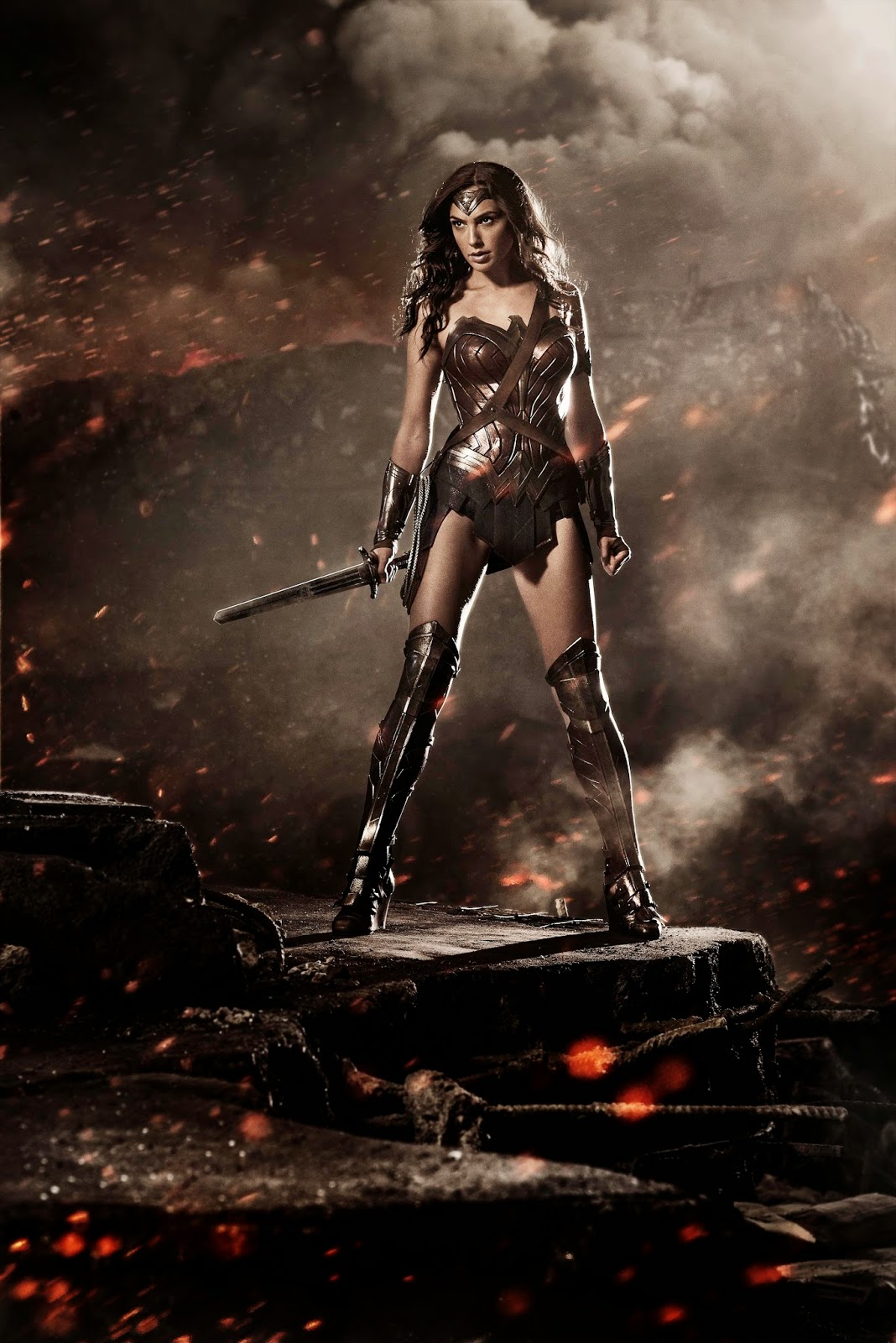
        And that’s why, even to a comic book n00b like me, the announcement that Wonder Woman was going to be included in the upcoming Man of Steel sequel and the more recent unveilings of her casting and costume were a really big deal. It’s not just that she’s somehow never been in a live-action feature film before, despite being one of the most iconic superheroes ever. As a well-known female superhero, that rarest of entities, she has the power to singlehandedly either transform the comic book movie industry by convincing studios and creators to finally take the women in the audience seriously or indefinitely shut down any chance we have of improving female representation in blockbusters. Fairly or not, Batman V. Superman: Dawn of Justice will essentially sink or swim based on its portrayal of Diana.


Wonder Woman preparing to stab whoever thought of that movie title

Friday, March 7, 2014

True Detective, Diversity and a Medium Coming of Age

WordMaster

The Internet was abuzz yesterday after Huffington Post TV critic Maureen Ryan published a thorough – and thoroughly depressing, if unsurprising – assessment of behind-the-scenes diversity on cable dramas. Though the article focuses on HBO, home of critically-acclaimed shows like The Sopranos, The Wire and Game of Thrones, Ryan also looks at AMC, FX, Showtime and Netflix, which all combine to form the forefront of modern-day so-called prestige television.

             Long story short, it’s not good. To summarize:

  • Over the past 40 years, HBO has aired precisely one original, hour-long drama series created by a woman (Cynthia Mort’s Tell Me You Love Me).
  • Since 2008, HBO has not aired a single one-hour drama or mini-series with a creator or “narrative architect” that is female or non-white.
  • In the last 12 years at the five aforementioned outlets, only 12% of drama series creators and narrative architects have been women.

Essentially, we’re not experiencing the Golden Age of TV so much as the Golden Age of White Male TV. If you asked someone what the best shows of the past decade were, he or she would probably rattle off a list that includes The Sopranos, The Wire, Game of Thrones, Breaking Bad and Mad Men, all of which not only revolve around central male protagonists but are also produced, written and directed predominantly by men. This is not to diminish the artistic quality and cultural significance of those shows in any way; even though I have my personal preferences (Mad Men forever!), few would deny that they have all, to some extent, altered the way we view, think about and discuss the medium, elevating it from “fun” escapism for mass audiences to something more refined and ambitious.

Thursday, December 5, 2013

On Ignorance, Hypocrisy and Anti-Feminism

WordMaster

***Note: For the sake of brevity, unless otherwise indicated, the term “men” in this blog post refers to heterosexual cis males.***

             A couple weeks ago, Joss Whedon made waves across the Internet when he spoke at an Equality Now dinner about his issues with the word “feminism”. While I don’t doubt that he had good intentions, and he did bring up an issue worth discussing (albeit not as revolutionary and novel as he seems to think it is), the overall speech is something of a disaster. Besides the fact that Whedon is a wealthy, heterosexual, cis-gendered white man and therefore not in a position to lecture feminists on how to run their movement, he demonstrates a complete ignorance when it comes to the history and theory of feminism and how oppression works. No one’s perfect, but considering that Whedon is viewed by many (unjustly, in my humble opinion) as a feminist icon, his lack of self-awareness is disconcerting, to say the least.

             That’s just one instance in an ongoing trend of anti-feminism. In recent years, a number of high-profile women, from Katy Perry and Taylor Swift to Susan Sarandon and Kelly Clarkson, have “come out” as not-feminist for a variety of reasons. It must be noted, first of all, that “Are you a feminist?” is starting to become as tiresome as all those dieting and beauty-related questions that actresses are blitzed with during press junkets. The whole idea that female entertainers are obligated to embody some kind of feminist ideal is misguided at best (you’d think we would have learned by now that viewing celebrities as role models can only lead to heartache and disillusionment, but apparently not). But that is not to say we shouldn’t be critical of public figures; after all, these are the people who, in theory, possess the power to make a significant impact on society. So, as unfair as it may be, when people like Kelly Clarkson and Joss Whedon publicly reject feminism, it reflects poorly on the movement as a whole.

You heard Tina Fey: this is not helpful.

There are plenty of valid reasons for a person to not identify as a feminist. It’s no secret that the movement has a rather troubled history of focusing on the needs of a specific demographic (namely, upper/middle-class heterosexual white women) while marginalizing or downright ignoring other, less visible groups – hence, the emergence of intersectionality and Alice Walker’s womanism. As a collection of many different individuals with their own personalities, backgrounds, beliefs and values, feminism encompasses a wide range of complicated, even contradictory ideas, which inevitably results in disagreements and internal conflict. In fact, the principles of feminism are so broad and loosely defined that they render the term pretty much meaningless; labels matter little compared to actions, so as long as you consciously strive to create change, it doesn’t matter what you call yourself.

Wednesday, November 27, 2013

A Childhood Disillusioned

StarGazer

        Like pretty much every American born within the past 50-plus years, I grew up on the works of Disney, my days filled with colorful, bubblegum-sweet images of princesses, cuddly animals and gift-wrapped-with-a-bow-on-top happy endings. I remember watching The Lion King and Aladdin (and, more shamefully, their sequels) on an endless loop, and I knew all the lyrics to songs like “Can You Feel the Love Tonight?”, “Part of Your World” from The Little Mermaid and Mulan’s “Reflection”. I’ve visited every single Disney theme park in the world, except for the one in Paris; I’ve been to a couple of them multiple times, since I’m a spoiled, extremely lucky brat. Just thinking about Toy Story still sends a shiver of nostalgic delight up my spine.

        Yet, despite these fond feelings, I've realized that Disney isn't quite the perfect, carefree utopia we like to imagine it is as kids. Even when I was younger, I didn’t particularly care for The Jungle Book or Snow White, though for the latter, that was as much because I thought the Evil Queen was scary as any discomfort over its depiction of women. I’m well aware that, like any other company, Disney has a more cynical corporate side that’s concerned more with marketing and branding than storytelling integrity. Still, it really wasn’t until certain recent developments that my mental image of the Disney/Pixar offices as some kind of magical paradise, a veritable playground for the imagination, finally and completely shattered.

        To start with a more subjective gripe, there’s the fact that their recent output feels drained of any ingenuity, consisting almost entirely of run-of-the-mill adaptations and sequels. Pixar, not long ago so renowned for their earnest creativity that the studio’s name was enough to get people flocking to their movies, has succumbed to the lure of lucrative merchandising and lazy sequels that pander to their audiences. I still can’t believe I actually paid to see the unfortunate dreck that was Cars 2, and I say that as someone who finds the first one highly underrated. While they’re still releasing original films and apparently plan to emphasize them going forward, even those lack the freshness that Pixar works had only a few years ago, and it’s disconcerting that they feel the need to keep up the sequel trend at all, especially since they appear to have no plans for the one non-Toy Story flick that actually could be good sequel/prequel/spinoff material.


I mean, come ON! It could be totally epic, I’m telling you.

        And then came the whole Brenda Chapman fiasco. A director getting booted off a project isn’t inherently cause for concern, as it apparently happens pretty regularly for animated films, whose directors aren’t as protected by guilds and unions as their live-action colleagues; after all, Pixar itself had previously replaced Jan Pinkava with Brad Bird on Ratatouille, and it’s already kicked Bob Peterson off next year’s The Good Dinosaur. However, seeing Brenda Chapman lose control of Brave was infuriating not only because it meant Pixar had replaced its first-ever female director with a man, but also because she supposedly had such an intimate, personal connection to the story. It seems Pixar trusted a dude to make a tale of female empowerment and mother/daughter relationships, instead of the woman who dreamed up the idea in the first place. Although we’ll never know what the movie would’ve looked like if they’d allowed her to stay on board, I wish we got to see her complete vision; it’s not like the version we did get was particularly impressive or even memorable. All the change of directors did was draw attention to just how much of a boys’ club Pixar is.

Saturday, October 26, 2013

Representation, Point-of-View and How to Fix Blockbusters

WordMaster

             One of the most common responses to women who criticize the lack of prominent, well-written female superheroes is something along the lines of: “Who cares if the main character is a man, as long as the movie is good?” Which is technically true, since movies like Citizen Kane and The Lord of the Rings aren’t any less great for revolving around rich white men (or, in the case of the latter, hobbits), and despite the growing dissatisfaction with TV antiheroes, Tony Soprano, Don Draper and Walter White will always be complex, fascinating characters.

             But as much as some people try their damnedest to ignore it or to dismiss it as irrelevant, media representation is a big deal. Consider the explanations studios use to defend their reluctance to release a mainstream superhero movie headlined by a woman:

1)      Women can’t carry movies (ahem, Sandra Bullock says hi and go fuck yourself).
2)      Women don’t go to see genre movies (indeed, every single person who’s ever gone to any sci-fi, fantasy, action or horror movie is a white male between the ages of 12-25).
3)      Catwoman and Elektra sucked, so clearly, female superhero movies just inherently suck (never mind that Daredevil and X-Men Origins: Wolverine, among others, also sucked).
4)      It’s too big of a risk (after all, The Hunger Games was a major box office bomb – almost as bad as John Carter!).
5)      There aren’t many actresses who are kick-ass enough to pull off action roles (oh, please).

            So, yes, it matters a lot. It matters because, 27 years after Sigourney Weaver vanquished a colony of aliens in James Cameron’s adrenaline-charged action classic, we shouldn’t have to tolerate these bullshit excuses anymore. It matters because we live in a world where a feature-length, live-action blockbuster centered on Aquaman seems less far-fetched than one with Wonder Woman, where we have to struggle to get Black Widow her own solo project, yet Marvel can make a movie containing a CGI raccoon with a freaking rocket launcher and no one bats an eye. It matters because at one point this year, the D.C. metropolitan area had a whopping 25 screenings of movies about women. It matters because whenever a non-white actor is cast in an even moderately high-profile role, Internet message boards are flooded with commenters fuming about how the PC police are destroying the integrity of their beloved franchise with “lazy” attempts to “diversify” (apparently, the continuity of a fictional universe matters more than any desire to break down decades of institutionalized prejudice).

Let’s not forget that time when so-called “fans” of The Hunger Games spewed racist complaints about a character that was explicitly written as black in the source material.

           Perhaps most importantly, though, it matters because, as any English teacher will tell you, point- of-view is a vital part of storytelling, if not the most vital part. After all, at their core, stories are about the journeys of characters, their efforts to complete a task, satisfy a desire or overcome an obstacle; who those characters are defines the story’s direction, tone, pacing, ideology, everything. You can’t just choose any random character to be your protagonist, and you can’t change your protagonist without completely changing the story.

Monday, October 14, 2013

On The Bechdel Test and “Strong” Female Characters

StarGazer

***SPOILER ALERT!***
Pacific Rim
Iron Man 3

        One of the first topics brought up in any conversation about gender politics in pop culture is the Bechdel Test. You probably know what I’m referring to, but in case you’ve been living under a rock or need a refresher, here’s a helpful link that not only explains the test’s rules, but also evaluates recent movies based on well they fulfill those requirements.  When explaining the test’s purpose, it’s tempting to say that it shows how “feminist” a movie or TV show is; however, that’s not quite accurate, and such an explanation is both overly simplistic and misleading.

        Really, the Bechdel Test has very little to do with indicating what films are women-friendly or the overall quality of the work itself, and as an arbiter of individual movies, it’s a next-to-pointless exercise. Nowhere is there any criteria dictating how complex or plot-essential a female character should be in order to count, though a sometimes-included rule requiring the characters to have a name means passing movies will have two women who aren’t just glorified extras. Even then, they could be horribly offensive stereotypes (see: Anne Hathaway’s shameful post-first-Oscar-nomination dud Bride Wars). In addition, its pass/fail grading system makes it easy for people to turn the test into the be-all-end-all of feminist pop culture criticism, potentially shutting down more in-depth conversations about how the work actually deals with gender. Again, just because a movie passes, it doesn’t mean that it’s feminist or a good movie, and a movie that fails isn’t necessarily sexist or bad.   

        This isn’t to say that we should straight-up burn the Bechdel Test. In fact, even almost thirty years after it was first conceived, it remains an important and (sadly) relevant tool. Its problems arise less from the test itself and more from people who misuse or don’t completely understand it. The test works best when you broaden the scope and critique entertainment on an industry-wide scale; whether one specific film does or doesn’t pass is of no consequence, but after looking at enough movies, a trend emerges: the fails are way more numerous than the passes. Considering how rudimentary the test is, this knowledge is sobering, to put it mildly. ‘Cause women never have anything more fascinating than dudes to talk about, amiright?

I think these ladies would beg to differ.

Monday, June 3, 2013

Female Nudity and the Critic's Gaze

WordMaster


Between the convoluted plot and J.J. Abrams & co.’s reluctance to deviate from canon despite the fact that the franchise’s recent incarnation was set up as a reboot, not a remake, Star Trek Into Darkness isn’t quite the soul-crushing masterpiece I was hoping for. Basically, it’s more The Dark Knight Rises than The Dark Knight: enjoyable and well-acted with some great moments but undeniably messy. For all its flaws, though, the movie deserves to be remembered for more than a brief shot of Alice Eve in lingerie, which is apparently the biggest conversation surrounding the film, eclipsing Zachary Quinto's touching performance as Spock or, on the negative side, the blatant 9/11 parallels, numerous plot holes and even the troubling white-washing of Khan.

            That’s not to say the aforementioned shot isn’t worth talking about. Co-writer Damon Lindelof (who seems to attract outrage the way metal attracts electricity) and even Abrams himself have admitted that it was at best poorly executed and at worst misogynistic. Regardless of the filmmakers’ actual intentions, it’s easy to see how people would interpret the scene as blatant, gratuitous pandering to fanboys, since it had only the most tenuous connection to the ongoing action and apparently, all sci-fi movies should be marketed exclusively to dumb, horny teenage boys. As a whole, the film’s treatment of its female characters, while not necessarily outright misogynistic, is less than ideal. I’m all for a Spock-Uhura romance, but it would be nice if she got a storyline that didn’t directly involve her relationship with him, or if the character of Dr. Carol Marcus served a purpose beyond being a potential love interest for Kirk; I was disappointed that the movie never developed the budding rivalry between Dr. Marcus and Spock that was implied in her first scene (besides, if she ends up with anyone, it should totally be Bones, not Kirk, but maybe that’s just me).

            Even so, I can’t get worked up about The Scene. First of all, it could be argued that all the supporting characters, with the exception of Khan, were basically defined by their relationship to Kirk and/or Spock, and I was glad that Uhura actually got to utilize her language and fighting skills (hell, she got to rescue Spock at the end). Also, contrary to what one blogger says, unless my memory is mistaken, Uhura was not the only woman aboard the Starship Enterprise; like what Joss Whedon did in The Avengers, Abrams included some women and non-white people (!) in the background of the crew, which isn’t exactly progressive or worthy of applause but doesn’t erase the fact that they were present nonetheless. As for Dr. Marcus, it makes sense that Kirk would view her primarily as a sexual object and express little interest in her supposed intellectual capabilities, since Abrams’s version of the character has always been portrayed as something of a serial philanderer.

Monday, March 4, 2013

The Lady in the High Tower

WordMaster


             To put it lightly, this has been a rough time for feminists. Yes, we have made significant progress since the Mad Men Era (aka the 1960s, when people still legitimately believed that schizophrenia and autism were caused by negligent parenting), but misogyny remains sadly prevalent in our allegedly post-feminist society, as evidenced by various recent events. First, there was the Sandra Fluke-Rush Limbaugh controversy, which really hasn’t gotten any less infuriating over time. Then, we had the even more B.S. “legitimate rape” comments from (ex-)Missouri Senate candidate Todd Akin and this quote from author Bret Easton Ellis, among various other sexism-related controversies. And just last week, the Oscars were greeted with outrage over host Seth MacFarlane’s intentionally provocative “We Saw Your Boobs” bit, in which an all-gay male choir sang about female nudity in movies.

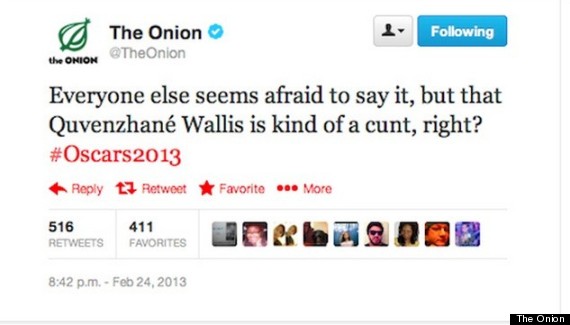
             I could fill a novella with my feelings about the reaction to MacFarlane’s joke, which, in all honesty, bothered me infinitely more than the joke itself. Don’t get me wrong: “We Saw Your Boobs” is of questionable taste at best, and if anything, the response to it shows that it failed to get across whatever satirical point MacFarlane was trying to make. But maybe because I’ve watched way too many talk shows (where this brand of comedy is more or less the norm) or maybe because, even though I don’t care for his work in general, I genuinely wanted MacFarlane to succeed as Oscar host (partly since everyone else, for whatever reason, wanted him to fail), I can’t force myself to share the sense of moral indignation that lit up the Internet after the ceremony. Were some of the jokes offensive? Probably. Did all of them land? Definitely not. Worst Oscar host ever? Do you even remember James Franco and Anne Hathaway? This is a textbook example of the penchant for hyperbole that characterizes the Internet Age – everything is either the best thing ever or a crime against humanity, and everyone is either a “perfect human being” or an insufferable dickwad. Although I would never deny anyone’s right to be offended, at a certain point, I feel like you have to be able to say, “That was distasteful” and move on - or at least provide some insightful, introspective commentary to go along with your self-righteous moralizing. Personally, I would rather spend my time ranting about the aforementioned Sandra Fluke episode or even the ludicrous comments that have been made about Best Actress nominee Quvanzhané Wallis (one of which was, to be fair, followed up by a rare public apology that actually seems sincere), but then again, I'm not going to stop people from expressing their own thoughts and opinions.

Tuesday, December 18, 2012

Lucky Him: Why the King of Queens Principle Needs to Die


           Let me paint a picture for you. Once upon a time, there lived a schlubby guy with low self-esteem. He toiled away day after day at a menial job, receiving no recognition for his hard work and generally getting nowhere in life. His friends and coworkers agree that he is an all-around loser and make fun of him when he’s not in the room and, on occasion, when he is; perhaps they only hang out with him because he makes them feel better about themselves. Then, one day, they get the opportunity to finally meet the wife he keeps talking about (some of them had even questioned whether she really existed, because who’d want to marry a guy like that?). The time comes to meet her, and they can’t believe their eyes! The woman standing before them isn’t the homely embarrassment they were expecting: in fact, she’s downright hot. Like, Playboy bunny hot. Suddenly, they’re in awe of him. They can’t stop giving each other looks, wondering how that sucker scored such a babe of a wife. What’s his secret?

           Does this scenario sound familiar to you? If it doesn’t, you must not have watched a single movie or TV show in, I don’t know, your life (in which case, I’m not sure why you’re reading this blog, but you’re certainly welcome to stay). The average-looking dude/bombshell gal dynamic, which I am hereby dubbing the King of Queens Principle for this article, has been a pop culture staple for decades, appearing in everything from Annie Hall and The Hunchback of Notre Dame to Adam Sandler movies and pretty much anything about high school and teenagers ever.

            In case you can’t already tell, this particular cliché is a bit of a pet peeve of mine. Most recently, it was brought to my attention by a subplot in the latest episode of Parks & Rec. For those who don’t watch the show, or haven’t seen the latest episode, Jerry, who is essentially the loser described in the hypothetical situation above, throws a Christmas party, and to the amazement of some of the other characters, this party is actually really popular and awesome. At the party, they see his wife, Gayle, for the first time, and what do you know, she’s incomprehensibly hot. Tall and blonde with an hourglass-ish figure, she looks like a model; as a matter of fact, she’s played by real-life model Christie Brinkley. What’s more, she’s so attractive that she looks the same age as her and Jerry’s three daughters, who are also very pretty. Adam Scott’s Ben essentially spends the entire episode gaping at the sight this man, hapless, square-as-a-box Jerry, with that woman.

Thursday, August 2, 2012

The Golden Age of Superheroes

WordMaster        

           At one point during Joss Whedon’s mega-blockbuster The Avengers, Nick Fury muses that heroes are “an old-fashioned notion”. Indeed, after the Cold War, Watergate, 9/11 and dozens of other scandals, controversies and tragedies, the idea of superheroes – extraordinary individuals who combat evildoers and protect their societies with the help of a secret identity – seems hopelessly naïve. Even as we admire the physical and moral qualities of superheroes, we can’t quite get rid of that thought nagging at the back of our minds: why should we put the safety of the community, if not the entire world, in the hands of a guy dressed in spandex tights, who is just as fallible as the rest of us? The whole idea isn’t inspiring so much as ridiculous and more than a little elitist. 

            So, it seems paradoxical to say that 2012, a year that has seen the U.S. mired in seemingly endless economic turmoil and an already-tiresome presidential campaign, represents the Golden Age of superhero movies. The 21st century has been largely defined by cynicism, bitterness and gloom, yet never has the superhero genre, one almost relentless in its romanticism and naiveté, been so popular, so mainstream. And to cap it all off, this year – this summer, to be more specific – heralded the release of three of the most eagerly anticipated superhero movies in history, a holy triumvirate that brought a decade-long struggle for acceptance to its rousing (and lucrative) climax: The Avengers, The Amazing Spider-Man and, at long last, The Dark Knight Rises. What’s remarkable about these films is not the overwhelming hype leading up to them or their inevitable annihilation of the box office but the fact that collectively, they showcase everything that superhero movies are capable of, embracing the genre’s tropes while also pushing its boundaries in subtle and exciting ways. Enjoy this, fellow moviegoers: we’re witnessing the end of an era, a genre at its best, and more likely than not, we’ll never see anything like it again.

Monday, July 16, 2012

The Not-So-Itsy Spider (No, Not Spider-man)


         One word: Black Widow. So two words, actually.

           I’ve read mixed reactions to Scarlett Johansson’s part in Marvel’s latest orgasm of property damage, and after hours of thought-provoking research and hours of less thought-provoking tumblr, I’m ready to weigh in. The two sides of the argument, to the best of my research and exposition skills, are as follows: one camp seems to believe that Black Widow was portrayed in a tasteful, respectful, and well-developed way; the other holds that she’s the latest victim in Hollywood’s longstanding infatuation with sexism and superheroes. And then some people didn’t seem to notice she existed at all.  

           If you go through a lot of the Avengers comments, you’ll find some recurrent themes. More often than not, Black Widow’s character is mentioned in passing as a (female) master assassin; and then they go on to talk about characters that are more interesting (ie have more penis). When she is given some actual ink on the page, chances are that the majority of it will be dedicated to how hot she looks in leather. Because as soon as a woman steps onto the screen, audiences (and specifically male audiences, let’s not sugarcoat this) are conditioned to first see them in a sexual light. Decades of introducing women with slow body pan ups has helped see to that.

            Just look at this review at the New Yorker, where the critic decided that “Black Widow repels invading aliens through the sheer force of her corsetry.” Yeah, because her guns and combat training and intelligence and courage had nothing to do with it.


BITCH PLEASE

Friday, July 6, 2012

2012: The Year Women Took Over a Man’s, Man’s, Man’s World


StarGazer         

              According to journalists, bloggers and whoever else decides this sort of thing, 2012 is the Year of the Movie Geek – or, as Entertainment Weekly suggested, to some predictable grumbling, the Year of the Dude Movie. You could go through the usual arguments about how movies aren’t gender-exclusive and how women enjoy watching superheroes and shit blowing up just as much as men, but it’s hard to deny that this year seems to be stuffed with even more traditionally male-oriented fare than usual, with offerings like The Dark Knight Rises, The Avengers and The Bourne Legacy dominating the year’s cinematic slate and nary a romantic comedy or female-centric film to be seen. Yet, amidst all this testosterone, a ray of hope has quietly emerged: despite being theoretically geared toward men, many of these action, sci-fi and comic book flicks have actually served as showcases for women.
               
  Don’t believe me? Take a look at some of the “dude movies” released thus far. January 20th kicked the year off with Underworld: Awakening, the fourth installment in that shockingly prolific vampires-meet-werewolves franchise, and Steven Soderbergh’s spy movie Haywire, both headlined by women. Fast-forward two months, and we’ve got The Hunger Games, 2012’s first real blockbuster; like the Suzanne Collins young adult novel it was based on, the movie derived much of its appeal from the character of Katniss Everdeen, who has become one of the most iconic heroines in recent memory thanks to her fiery personality and skill with a bow and arrow. The Avengers may have been a sausage-fest in terms of sheer numbers, yet it was Scarlett Johansson’s Black Widow who not only served as the superhero juggernaut’s emotional center, but also seemed to generate the most conversation among filmgoers, even if some people refused to recognize her awesomeness. Snow White and the Huntsman and Prometheus? More leading ladies. Even Pixar got in on the act, featuring a female character as their central protagonist for the first time ever in Brave.

  Of course, these are hardly the first movies to put a woman in the center of all the action. In 1979, Ridley Scott introduced the world to Ellen Ripley, Sigourney Weaver’s smart, competent and tough corporate grunt-turned-alien fighter who is largely recognized as cinema’s first real action heroine. With the sequel, Aliens, in 1986, Ripley was firmly cemented as a character as edgy and classic as James Bond or Indiana Jones.

 Just sooo badass.

Saturday, April 14, 2012

Why Must the Haters Hate?


While watching Titanic 3D, I couldn’t stop smiling. That probably sounds weird, considering the movie is about a real-life disaster that resulted in the deaths of thousands of people, but there was something so awe-inspiring, almost transcendent, about seeing it on the big screen. Like floating in a waking dream. When you watch a good movie, whether for the first time or the fiftieth, there’s usually a moment in which you decide to surrender yourself, when you become so engrossed in its story and characters that everything around you melts and nothing exists except you and the images flickering on the screen in front of you. For me, in Titanic, that moment came about half an hour into the movie, when Leonardo DiCaprio’s Jack Dawson climbs onto the railing and hollers at the top of his lungs, “I’m the king of the world!”, his arms raised in triumph. It was a moment of such pure, unrestrained joy that I wanted to whoop and cheer along with him, but because I was sitting in the middle of a theater in Northern Virginia, all I could do was beam deliriously and try not to squeal like a pre-teen girl at a screening of The Hunger Games. This is what movies are made for.

To be clear, this was far from the first time I’d seen Titanic. I own the DVD, and I often catch snippets of it on TV, but I was about kindergarten-age when it was originally released in 1997, so this was my first chance to see it on the big screen. And holy shit, is it worth the price of admission. Admittedly, the 3D is unremarkable (in fact, if it wasn’t for the cheap plastic glasses perched on top of my nose, I probably wouldn’t even have noticed it), but the film is so grand and absorbing on its own that you don’t need an extra dimension to be completely immersed in it. For the first time, I could fully appreciate the richness of the visuals – the elegant costumes, the intricate set design, the CGI that looks stunning even when it seems a tad dated (not to mention the vividness of Billy Zane’s eyeliner). Regardless of what you think about the movie as a whole, you have to admit that it looks pretty fucking amazing.

Yet, even as I lost myself in the surreal magic of James Cameron’s epic disaster tale-meets-romance, I couldn’t stop thinking about the fact that for every person like me who falls in love with Titanic, there are dozens who regard the movie as nothing more than maudlin, histrionic trash. I’m supposed to find the script cringe-worthy, the romance excruciatingly clichéd, the protagonists obnoxious, the emotion artificial and manipulative. Even many of the movie’s fans describe their affection for it as “corny”. In other words, no one is supposed to like Titanic as anything besides a guilty pleasure because God forbid anyone actually thinks it has real merit or depth. But there’s nothing corny about my love for Titanic. To me, it’s a genuine masterpiece of old-fashioned spectacle and no-guts-no-glory ambition.

That’s not to say it’s beyond reproach. Some of the lines sound cheesy and ham-fisted; the present-day exposition is too long and not as engaging as the main story; there is a plethora of plot holes (though I’d still argue that if you were trying to survive in ice-cold water at two o’clock in the morning, you wouldn’t exactly be thinking clearly either); and the portrayals of upper-class snobbery occasionally cross the line between satire and caricature. I’m not so protective of the movie that I won’t acknowledge its flaws or make fun of them when appropriate. And I’m not opposed to criticism as long as it’s reasonable; it’s your opinion, it’s not the end of the world, haters gonna hate, etcetera, etcetera. Where I draw the line, however, is when people go out of their way to disparage a movie and its fans by using such meaningful phrases as “It sucked”, “It was crap” and “HATED [such-and-such movie] and couldn't wait for [so-and-so] to die so I could get out of the theater.  My friend and I were giggling and saying 'just die already' for what seemed like an hour”. It’s one thing to dislike something, but it’s another to act like your opinion is a definitive fact and somehow makes you superior to everyone else.

The fact is that the animosity directed at Titanic frequently extends beyond mere criticism. By now, I’ve accepted the fact that most popular movies – whether in terms of the box office, critical acclaim, awards or a combination of the above – inevitably receive a backlash of some kind, a reactionary movement in which people who found a movie in any way disappointing or flawed feel compelled to proclaim to the world that said movie was “overrated” or that it “didn’t live up to the hype”, as though their personal dissatisfaction is somehow the fault of everyone who did enjoy the film. But few, if any, movies receive a counter-reaction as rancorous as the one that greeted Titanic after its initial release and subsequent rise in popularity; even the Twilight hate is, to some extent, tongue-in-cheek. In a way, Titanic never escaped the contempt that hounded it prior to its premiere, when the media and a sizable portion of the public eagerly anticipated what seemed all but guaranteed to be a failure of Herculean proportions. With a bloated budget of $200 million (making it the most expensive movie ever made at that point), multiple delayed releases, rampant rumors of on-set quarrels, and a running-time of three hours and twelve minutes, it was the personification of Hollywood excess, an exercise in self-indulgence and bombastic sentimentality that reeked of hubris – ironic for a film centered on the infamously “unsinkable” ship that sank on its maiden voyage along with over 1,500 unlucky passengers.

As Entertainment Weekly’s Owen Gleiberman so eloquently pointed out, the Titanic backlash represents one of the many byproducts of our Internet-savvy, post-9/11 era: it isn’t only popular to hate Titanic, it’s cool. 21st century society is one in which people hide behind anonymous usernames in order to liberally express their opinions without fear of consequences, in which irony is the celebrated as the pinnacle of wit, success and popularity are scorned, and optimism is considered disingenuous and shallow. So it’s no surprise that Titanic, with its sweeping scope, starry-eyed romance and shameless idealism, became an easy target for elitist contempt. It simply doesn’t play into contemporary notions of hipness. In a society obsessed with realism and masculine toughness, James Cameron dared to tell an earnest, impassioned story that took the concept of true love seriously, and skeptics responded by dismissing it as superficial, melodramatic BS that appealed to no one except for hysterical teenage girls in search of wish fulfillment. They couldn’t tolerate the idea that, even in a fictional universe, the concept of love-conquers-all could be anything other than absurd. It was too unapologetically emotional, too quixotic, too… feminine.

For beneath all the gripes about the predictable plotline and “embarrassing” dialogue is an unmistakable layer of misogyny, a sense that if men don’t like something, no one should; that because Titanic is a non-ironic romance that wears its heart on its sleeve, it isn’t complex, edgy or serious enough to deserve its status as a modern classic (I forgot, only depressing movies can be deep). It’s virtually impossible to have a conversation about the movie on the Internet without numerous guys fuming over how they only saw it because their girlfriends or wives dragged them to the theater, flaunting their narrow-mindedness like a badge of honor. Never mind that it’s the 2nd highest grossing movie in the world, a Best Picture winner and an undisputed cultural icon. For many people, Titanic is still a sappy chick flick that men should be embarrassed to like (or watch willingly), successful not because anyone thinks it’s legitimately good but because throngs of hormonal girls and women wanted to swoon over Leonardo DiCaprio – to them, it’s Twilight masquerading as art. Never mind that the dialogue in, say, Star Wars is as clumsy as anything in Titanic, yet you never hear anyone prattle on about how laughably bad that is. Or that men are free to fantasize about Marilyn Monroe or (gag) Megan Fox to their hearts’ content, but when women venture to be open about their celebrity crushes, they’re stupid, immature and delusional. Or the fact that many of the most controversial Best Picture winners, like Forrest Gump, Shakespeare in Love and Ordinary People, are period pieces, romances or relationship dramas, whereas the movies that they supposedly robbed (Pulp Fiction, Saving Private Ryan and Raging Bull) are dark, R-rated movies about crime, war and men being men. The cynical, male-centric Internet can’t comprehend our female sensibilities, our obsession with “feelings”, so any movie that dares to be sincere about those things is labeled slight and sentimental. 

 
No wonder this thing we humans call love is so foreign to them – they’re all men.


Then, there’s the hype itself. If Internet commenters are to believe, no one had anything against Titanic at first, but then, it became the highest-grossing movie in the history of the world, swiped a record-tying 11 Oscars and generally monopolized media and public attention for months on end. Naturally, those not completely infatuated with it responded by retroactively deciding that they couldn’t stand the movie and insisting that the hysteria was massively, outrageously overblown. It may have been a perfectly okay film, but it wasn’t anything special and certainly didn’t deserve this level of adoration. And to a certain degree, I get it: it’s hard not to feel resentful or alienated when you can’t go a day without hearing other people rave about how amazing such-and-such movie/TV show/book/etc. is. But at the same time, I’m always baffled by people who boast about how X is so overrated and how they don’t see what all the fuss is about, as though their contrarian opinion is somehow proof of their superior, more refined taste. There’s nothing wrong with disliking something, but why do people take so much pleasure in being negative? Relentless cynicism isn’t clever or subversive; it makes you sound like a pretentious asshole. I guess I just like liking things – except for Glee. Always hate Glee.

I like you Darren Criss, but this picture?
Kinda like the show as a whole: flashy, bizarre and the slightest bit douchey.


The worst part is that in the midst of all the mockery and hostility, few people seem to appreciate just how masterfully constructed Titanic really is. On paper, the central romance is somewhat conventional and far-fetched, but Leonardo DiCaprio and Kate Winslet share such natural, intoxicating chemistry that their characters’ relationship is never less than believable, even though they only know each other for a couple days. But Titanic is more than a simple story about star-crossed lovers. It’s also an exploration of early 20th century class relations and a coming-of-age tale about a sophisticated yet fiercely independent woman who discovers her own inner strength and learns to survive in a callous, unjust world. And most notably, it’s an allegory about hubris and what happens when the illusion of control that humans so cherish is shattered. What makes the movie so devastating and memorable is not the romance at its center, as poignant as that is, but the morality tale intertwined with it, the horror of watching thousands of people descend into anarchy as they gradually begin to recognize the fragility of their existence. The Titanic isn’t just a ship; it’s also a symbol of power and civilization, and the events that unfold after it strikes the iceberg feel utterly authentic in their depiction of panic, selfishness, despair, savagery, perseverance and courage in the face of near-certain death. It’s a vision of destruction, lost innocence and unexpected grace that’s bizarrely, almost disturbingly resonant in our post-September 11 world. It seems to say, we are all kings of the world. Until we aren’t.

Thursday, March 29, 2012

Not Feeling The Love

StarGazer

 ****WARNING: Contains spoilers for Fringe.****

            The FOX TV show Fringe recently returned from a month-long hiatus with the episode “A Short Story about Love”. Without going into too much depth about the details of the story, suffice it to say that the episode ends with a certain oft-troubled couple (she got kidnapped and replaced with a doppelganger from another universe, he was erased from existence, you know, the usual relationship issues) embracing in the middle of the street, finally sharing a moment of unadulterated happiness, though how long this will last is another question.

            It was a moment that sent many fans, including me, into a momentary state of heady euphoria. Yet, even as shippers eagerly uploaded gifs and screenshots to Tumblr, this delight was quickly offset by another equally vocal group of fans who bemoaned the development, complaining that it reduces Olivia Dunham to a yet another weak, Bella Swan-esque female character who is willing to throw her entire life away for the sake of a man.

            In addition to prompting a mental rant about how ridiculous and wrong that comparison is, this got me thinking about how people treat women when it comes to fictional romances and whether or not choosing love over her career/family/whatever inherently undermines the strength or feminist values of any female character put in that position.


But seriously? Just no.


            I think it’s safe to say that, from a feminist’s point of view, marriage – or even just total commitment to a romantic relationship with a man – is often regarded as a weakness, a regression toward old-fashioned values and a sign that a woman is willing to submit to the Prince Charming fantasies cultivated by a paternalistic society. Strangely enough, this attitude seems to be less prevalent when it comes to real life, probably because it’s rarely an either/or situation nowadays, than it is for fictional stories, particularly romantic comedies, which are frequently derided for portraying women as either lovelorn weaklings or uptight shrews who only need a man to come along and sweep them off their feet, thereby fixing all the problems in their lives and giving them the happy ending they’ve wanted all along. On the other hand, women who ultimately reject the advances of their male suitors and choose instead to pursue their own goals, usually career-related, are praised as progressive and strong (see: Broadcast News, for example).

            Now, just to make things clear, I’m all pro-feminism, and girl, you sure as hell shouldn’t need a guy and a ring on your finger to feel good about yourself or your life. That’s the thing, though, you shouldn’t need any of that, but that doesn’t mean it’s necessarily wrong to want it either, or to embrace that kind of love if it comes around. Certainly, a romantic relationship demands some compromise and loss of independence, but so do all relationships and major commitments, and it’s not like it’s any different for whoever the significant other is. My point is that people shouldn’t treat love life as the be-all-and-end-all gauge of a female character’s internal strength. Even in romantic comedies, there are plenty of dynamic, nuanced and self-sufficient women who end up proclaiming true love or tying the knot, like Meg Ryan’s Sally in When Harry Met Sally or Dorothy Parker (Renee Zellweger) in Jerry Maguire.

            Furthermore, this attitude that women who self-sacrifice in the name of love are undermining their own strength screams double-standard. If a guy decides to drop everything, run to the airport (literally or figuratively speaking) and reveal his affections for the girl of his dreams and how much he needs her, etcetera, it’s romantic. We swoon, marveling at his dedication and soul-baring honesty.


Ryan Gosling loved Rachel McAdams so much he even grew this goddamn beard.
Now, that’s sacrifice.

            But when a girl gets all “I love you and I need you in my life” or “I’m just a girl standing in front of a guy…” (you know the rest), she’s a needy, superficial lovebird who spent too much time growing up watching Disney movies. Apparently, she can complete him, but not the other way around.

            That doesn’t mean all the criticisms about the way women are treated in romances and romantic comedies are misguided, but the fault usually lies in the writing and the general characterization of the heroine, not because of the inherent nature of the act itself. Bella Swan is a weak character not because she falls in love, but she is wholly defined by her romantic desperation and Stephanie Meyers never allows her to develop any other personality traits. On the other hand, Olivia has long since been established as an intelligent, independent woman who cares deeply about other people but has no qualms about kicking ass when necessary. Her decision to stick with Peter, even if it came at a significant personal cost, was well-thought-out, and she was aware of the consequences. It was a conscious choice, and I respect her for it.

Also, this says everything.

            It was a moment of happiness well-earned by both the characters and the writers and actors. I, for one, was just glad to sit back and enjoy it.