Pages

Showing posts with label oscars. Show all posts

Monday, January 12, 2015

Why the Oscars Have Nothing to Do With Art

StarGazer

        Now that the Golden Globes have passed (Tina Fey and Amy Poehler hosted the uneven ceremony Sunday night) and the Oscar nominations are set to be announced this Thursday, the 2015 movie awards season is officially reaching peak frenzy. As intense as this time of the year can be for film fans, I haven’t felt a great need to write about this year’s race, in part because the majority of my thoughts, hopes and gripes aren’t all that different from last time; the dynamics of each season are essentially the same, just with a new set of names in the spotlight. While the particular debates and controversies this time around haven’t piqued my interest, I have found myself lately thinking a lot about what it really means to be “Oscar-worthy”, or even what it means for art to be good in general, and what, if anything, that says about our interests and values as moviegoers and a society.

        The phrase “Oscar-worthy” gets tossed around a lot, but there’s rarely any explanation of what that actually means. Though it’s often said with some level of derision or irony, it seems to be used as a sincere marker of artistic quality just as often, even by those who turn their noses up at the Academy. It implies some kind of standard that movies must live up to in order to be deemed deserving of awards consideration, though no one ever articulates exactly what those standards should be. To what extent should a film’s technical/aesthetic prowess, cultural or popular impact, or political, social or moral significance be taken into account? Do Academy members have any greater responsibilities to the industry or the public when making their selections or should they simply choose what they legitimately liked the most based on their own personal preferences? For the most part, it’s agreed that the Academy has little actual credibility as a tastemaker, and the Internet has made it too easy to follow industry politics and the PR campaigns specifically designed to influence voters for even the most naïve person to believe they’re completely unbiased. I keep wondering why so much time, money and effort is invested not just by the industry itself, but by critics and moviegoers on awards that few treat with anything other than contempt. I’ve suggested before that the awards season is worthwhile because it provides an opportunity to celebrate filmmaking, even if the specific objects of celebration aren’t always the most laudable, but perhaps what really makes it worthwhile is that it forces us to consider and articulate why we think certain films deserve wider recognition and why others don’t. It pushes us to interrogate our own ideas of what makes some art great instead of just taking our gut instinct of “I liked/didn’t like this” at face value.

Wednesday, January 15, 2014

Obligatory Oscar Post Part 2: The Real Meaning of Awards

WordMaster

            Like any annual celebration, the Oscars come with a few traditions: the bitter, media-fueled rivalry between two Best Picture contenders, minor political controversies blown way out of proportion, Armond White insulting someone at the New York Film Critics Circle dinner, think pieces contemplating how the Academy has lost touch with the public and/or reality, and so on. But perhaps the most obnoxious of these rituals is the inevitable surfacing of awards misanthropes – you know, those people who proudly proclaim (usually via the Internet) that the Oscars are meaningless and self-congratulatory and they don’t care, so anyone who does is clearly an idiot. Isn’t it just another excuse for a bunch of rich celebrities to pat themselves on the back?

            Well, I guess if you boil it down to the fundamentals, yes. Despite the hullabaloo that surrounds the ceremony and the hundreds of millions of dollars thrown at campaigns each year, everyone is well aware that the Oscars are petty and arbitrary. They’re by no means an accurate, definitive barometer of quality, because that doesn’t exist; like all art, film is subjective, so no matter what wins Best Picture, someone’s always going to be unhappy, and the notion of comparing radically different works in the first place is kind of nonsensical. Parading around your disdain as if you expect a trophy or something doesn’t exactly make you original or clever. Besides, if you really didn’t care about the Oscars, you wouldn’t be commenting on them in the first place. As it is, you just seem like those people that show up every once in a while on pop culture message boards to ask why the writer of such-and-such article isn’t discussing [insert urgent political issue here] or, even worse, to simply say, “Slow news day, eh?”

It’s not like the Super Bowl is some earth-shattering event, yet you never hear football fans derided for their choice in entertainment.

            Personally, I have mixed feelings about the Oscars. On one hand, it can be frustrating and disillusioning to know that the whole thing basically amounts to an expensive, over-hyped P.R. stunt that stretches from one February to the next, and with all the speculation preceding the actual awards, the winners are rarely all that surprising. But every year, I still find myself getting genuinely excited to watch the tacky-glamorous ceremony, to see who gives the best speech, who accidentally lets loose an F-bomb on network TV, who wears the dress I most wish I could afford, etc.

Sunday, January 12, 2014

Obligatory Oscar Post Part 1: American Hustle and Crowd-Pleasers

WordMaster


              The arrival of the New Year can be many different things to many different people, from the promise of a fresh start to another reminder of the transience of life and inevitability of time, but for a pop culture junkie like me, it means three things: top 10 or “best of” lists, disposable action flicks and horror sequels and, as if to compensate for the second item, the Oscars. As far as award seasons go, this one is shaping up to be quite interesting, boasting an unusually strong field with no obvious frontrunners, at least in the main categories (Gravity might as well accept its Best Visual Effects trophy right now). Of course, things might and probably will change once the Golden Globes and Guilds reveal their winners, but for now, the competition remains happily wide open.

              Personally, I’ve never been all that invested in seeing what wins Best Picture, largely because, as anyone even remotely familiar with how the film industry works knows, it’s about as meaningful a title as “executive producer” (more on that in Part 2). But each year, I still find myself getting irrationally defensive about at least one movie, often one that I would readily acknowledge is far from flawless. Like any other topic covered by the media, from politics to pro sports, the Oscars acquire a set of narratives –storylines contrived to help the public follow, process and interpret events. In 2009, for example, we had the faux-rivalry between directors/ex-spouses Kathryn Bigelow and James Cameron, and last year was the completion of Ben Affleck’s redemption arc. We’re only just reaching the heat of this year’s race, but you can already see the narratives materializing. The Wolf of Wall Street is the movie that’s too dark and edgy for the unadventurous Academy. 12 Years a Slave is the Big, Important Film that everyone wants to win. And, for whatever reason, American Hustle is the bland, inoffensive “crowd-pleaser” that’s probably going to win even though it’s not Big and Important.


 Maybe because it’s kind of/sort of similar to Argo (a movie that also gets routinely over-simplified)?

              For the record, American Hustle isn’t my favorite movie of 2013 (that honor currently belongs to the poignant Before Midnight) or my personal choice for Best Picture (I’m being cliché and rooting for 12 Years a Slave, though I’d also be delighted to see Gravity come out ahead). But I still liked it a lot, and it’s disappointing to see the dismissive, even condescending attitude many critics have toward it. I shouldn’t feel the urge to root against a film I thoroughly enjoyed just so I won’t have to tolerate the barrage of hyperbolic outrage that will inevitably greet its victory.

Monday, March 4, 2013

The Lady in the High Tower

WordMaster


             To put it lightly, this has been a rough time for feminists. Yes, we have made significant progress since the Mad Men Era (aka the 1960s, when people still legitimately believed that schizophrenia and autism were caused by negligent parenting), but misogyny remains sadly prevalent in our allegedly post-feminist society, as evidenced by various recent events. First, there was the Sandra Fluke-Rush Limbaugh controversy, which really hasn’t gotten any less infuriating over time. Then, we had the even more B.S. “legitimate rape” comments from (ex-)Missouri Senate candidate Todd Akin and this quote from author Bret Easton Ellis, among various other sexism-related controversies. And just last week, the Oscars were greeted with outrage over host Seth MacFarlane’s intentionally provocative “We Saw Your Boobs” bit, in which an all-gay male choir sang about female nudity in movies.

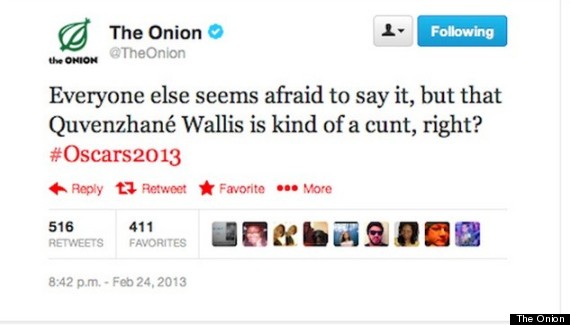
             I could fill a novella with my feelings about the reaction to MacFarlane’s joke, which, in all honesty, bothered me infinitely more than the joke itself. Don’t get me wrong: “We Saw Your Boobs” is of questionable taste at best, and if anything, the response to it shows that it failed to get across whatever satirical point MacFarlane was trying to make. But maybe because I’ve watched way too many talk shows (where this brand of comedy is more or less the norm) or maybe because, even though I don’t care for his work in general, I genuinely wanted MacFarlane to succeed as Oscar host (partly since everyone else, for whatever reason, wanted him to fail), I can’t force myself to share the sense of moral indignation that lit up the Internet after the ceremony. Were some of the jokes offensive? Probably. Did all of them land? Definitely not. Worst Oscar host ever? Do you even remember James Franco and Anne Hathaway? This is a textbook example of the penchant for hyperbole that characterizes the Internet Age – everything is either the best thing ever or a crime against humanity, and everyone is either a “perfect human being” or an insufferable dickwad. Although I would never deny anyone’s right to be offended, at a certain point, I feel like you have to be able to say, “That was distasteful” and move on - or at least provide some insightful, introspective commentary to go along with your self-righteous moralizing. Personally, I would rather spend my time ranting about the aforementioned Sandra Fluke episode or even the ludicrous comments that have been made about Best Actress nominee Quvanzhané Wallis (one of which was, to be fair, followed up by a rare public apology that actually seems sincere), but then again, I'm not going to stop people from expressing their own thoughts and opinions.

Sunday, February 24, 2013

Why I Still Care about the Oscars

StarGazer


       The Hollywood awards season coming to a close for the year. After months of campaigning, press tours and precursors ladled out by everyone from the National Board of Review and the Hollywood Foreign Press Association (otherwise known as those weirdos responsible for the Golden Globes) to the Screen Actors’/Directors’/Writers’/[insert other random film industry profession here] Guilds and the recent BAFTAs, we’re finally approaching the queen bee of awards ceremonies: the Oscars. The star-studded, at least three-hour-long event will be held tonight at the Dolby Theater in Los Angeles at 7:00 PM EST. For those who follow or are involved in these sorts of things, the arrival of the Academy Awards will probably come as something as a relief, the end of an exhausting and seemingly endless process that began in October with the announcement of the Gotham Independent Film Award nominees and that, by the end, will have spanned roughly five months; if you really want to get into it, awards season arguably starts in January of each year with the Sundance Film Festival.

        There was a time when I followed the movie awards season with an obsessiveness that I now mostly devote to baseball, spending hours on end scouring the Internet for even the most trivial bit of news and memorizing useless facts (can you name every Best Picture winner since 1988? ‘Cause I still can). I paid attention to the film festival circuit, watching eagerly to see which movies garnered the praise and buzz needed to propel them into the front of the Oscar race and which ones would be worth catching in theaters whenever they eventually arrived. I kept up with the latest “expert” prognostications from Variety, Entertainment Weekly, The Hollywood Reporter, Indiewire.com and all those other entertainment magazines and websites, and I read about the controversies and industry politics. I even used to come up with my own awards predictions, sometimes months in advance, and to argue about all these things on Internet message boards. Long story short, I was a total nerd.
                                                                                                                                                       
        I’ve gotten beyond that phase now, though it’s not because I have any more of a life (trust me, I really, really don’t); I just channel all that pointless geekiness in different directions. Let’s face it: the Oscars are a glorified celebrity ass-kissing party masquerading as an important, prestigious celebration of film. The amount of time, money, hype and effort that so many people put into this self-indulgent event, and the fact that an entire industry still essentially revolves around it, is rather incredible. Besides, the awards season often seems to contain as much political maneuvering as actual political campaigns, complete with studio-paid For Your Consideration ads, special screenings and luncheons for Academy voters and press tours filled with magazine covers, interviews and talk show appearances. It’s a media circus that renders the whole affair a cynical publicity stunt and undercuts the idea that the Oscars are supposed to be about artistic merit and achievement.

Saturday, March 10, 2012

And the Oscar for "Most Boring Ceremony Ever" Goes to... 2012!


            In the post-Oscaryptic 2012, our own WordMaster has boldly volunteered to sift through the rubble and pick at the meaningful bits. 


             I am writing about the Oscars two weeks after they happened. That’s how little I care. 
            The 84th annual Academy Awards were an opulent affair, complete with glamorous movie stars, elaborate dresses, dignified speeches, false modesty and strained smiles – basically, what we’ve come to expect from awards shows. And sure, there a couple mildly amusing quips (like… well, I get back to you on that) and some nice speeches (who knew the wittiest, most eloquent one would come from the oldest actor ever to win an Oscar?), but by the morning after, I barely remembered that the damn thing even happened. And let’s be honest, when the buzziest moment of the ceremony is Angelina Jolie’s leg, you know it was a boring fucking ceremony. The only thing that made me even the least bit excited was when Natalie Portman announced that Jean Dujardin won Best Lead; as much as I love George Clooney and Brad Pitt, Dujardin’s endless charm and exuberance felt like a breath of fresh air this awards season, when most of the nominees seemed about as thrilled as the cast of the 8th season of The Office.


            At this point, most of you are probably saying, so what? Haven’t we all accepted the fact that the Oscars are nothing more than a laborious, ludicrously expensive excuse for self-congratulatory celebrities to pat each other on the back? Aren’t award shows kind of stupid anyway? Well, yes. But the thing is, I’ve been watching the Oscars ever since I can remember, and I usually look forward to them the way that most people look forward to the Super Bowl or Christmas. The Oscars are supposed to be a night of revelry, of exhilaration, joy, suspense, hysteria, triumph and merciless judgment – the ultimate guilty pleasure. This year, though, they felt more like a chore than a celebration. For all their complaints about the dwindling viewership and their supposed desire to revive the glory days of the Titanic era, the Oscar producers and host Billy Crystal didn’t seem particularly interested in putting on a good show. It was more than a little pathetic watching them scramble for ways to make the Oscars relevant again and speculating about why last year’s ceremony, emceed by the ill-matched duo of Anne Hathaway and James Franco, crashed and burned so spectacularly. Their judgment was as accurate as that of a drunk driver. The entire thing, from the inexplicable Cirque du Solei performance to the hollow montages about how much films mean to people who make films for a living (yeah, we get it, seeing movies is like dreaming in the middle of the day; we already watched Hugo) and their refusal to acknowledge that Harry Potter – a franchise that defined the childhood of a generation – even existed, only proved how woefully out-of-touch the show-runners were.

           So rather than watch Hollywood bigwigs embarrass themselves further by trying and failing to figure out how to do their job, I decided to do the work for them.  Without further ado, here are a few suggestions for how to make us give a shit about the Oscars again:

  1. Get rid of the precursors. Even before it got nominated, everyone knew that The Artist had won Best Picture. After the National Board of Review, Golden Globes, SAGs, PGAs, DGAs, BAFTAs and a fuck-zillion critics’ awards (for God’s sake, even Phoenix – yes, that Phoenix – has its own awards) trudge by, serving no ostensible purpose other than to drain every last ounce of excitement from the Oscar race, it’s hard to care what the Academy of Motion Pictures and Sciences has to say.  9.9999 times out of ten, their list looks more or less indistinguishable from everyone else’s anyway. Sure, until the last minute, Best Actress seemed like a toss-up between Meryl Streep and Viola Davis, and it was perfectly conceivable that Clooney could beat Dujardin for Best Actor, but what’s the point of having five nominees (or ten, in the case of Best Picture) if only two of them are legitimate contenders? This year would have been infinitely more exciting if we had the illusion that Drive or The Girl with the Dragon Tattoo or Harry Potter and the Etcetera had a shot at Best Picture nominations and Hugo was still a genuine threat to win it all by the time the ceremony rolled by. Also, if I hear one more person complain that The Artist didn’t deserve to win Best Picture for no reason other than because we all knew it would happen, I swear I will sock them. It was a good movie, goddamn it, and if it wasn’t for the precursors, it would have been an underdog.

  1. Ban Oscar campaigning. By now, it’s an accepted fact in the movie industry that Oscar nominees are chosen less because of their actual quality than because of luck, timing, media attention and studio politics. Given that most Academy members don’t have time to watch all the contenders, it’s inevitable that external factors would play a role in their voting decisions, and I have nothing against studios trying to get attention for their contenders using For Your Consideration ads and marketing campaigns, but when producers are hosting parties or handing out gifts (read: bribes) to buy votes, it’s downright despicable. If it wasn’t for campaigning, I can pretty much guarantee that Extremely Loud and Incredibly Hollow wouldn’t be an Oscar nominee, and Saving Private Ryan would have clobbered Shakespeare in Love back in 1999. The Oscars should be about awarding the best movies of the year, not about which studio is willing to spend the most money for the privilege of being able to slap the words “Oscar nominee” or “Oscar winner” on the DVD. It’s about time we remembered that.

  1. At least pretend you care more about the actual awards than TV ratings. In an interview with Entertainment Weekly, producer Brian Grazer revealed his “ambitious” goal for this year’s show: “Hey, a two-hour show has never happened before. That's going to be our objective!” He was exaggerating of course (the likelihood of the Oscars lasting less than three hours is less than that of the A’s winning the 2012 World Series), but this mentality is precisely what is wrong with the Oscars nowadays. Here’s a novel idea: instead of obsessing over the almost inevitable possibility that the telecast will run overtime, why not focus on actually making it entertaining? If the show was fun to watch, no one would give a damn if it was four hours long. Recently, the Oscars seem less like a prestigious award ceremony than a sloppy variety show. Instead of wondering how to best honor the year’s movies, the show-runners perpetually fret over how to raise the TV ratings a smidgen of a percentage point higher than last year and how to pander to young people in the most condescending and ignorant way possible. For their information, Anne Hathaway and James Franco didn’t fail because they’re young; they failed because they were unprepared, there was literally no reason why they should be paired together, and their script sounded like it was written by a 70 year old impersonating his idea of a 13 year old. Teenagers aren’t aliens. We can appreciate wit, class and intelligent humor just like everyone else. So here’s my advice if you want to attract younger viewers: ditch the texting jokes because those stopped being funny before texting even became a thing, and don’t act like anyone over the age of twelve gives a shit about Justin Bieber.

  1. Be creative. AVClub’s Tasha Robinson hit the nail on the head when she astutely observed that “The 2012 Oscars struck me as one of the most standard examples of the ceremony I’ve seen in many years, almost like it was struck from a template—it felt to me a bit like a parody of itself.” As far as I remember, the Oscars didn’t include anything that we haven’t seen before: there was the host-reenacting-the-nominees skit, the opening musical number, the monologue, the needless montages, the passing-of-the-torch from last year’s acting winners to this year’s (to be fair, though, Natalie Portman and Colin Firth pulled it off with aplomb) and so on. The producers have millions of dollars, over three hours of screen time and dozens of creative minds at their disposal, so why do they insist on doing the same things every year? Instead of throwing together twenty minutes of montages paying tribute to scenes in which people wear glasses and wake up, why not use that time to let the Best Original Song and Score nominees perform or show clips from the nominated shorts? Or have musical guests like the Grammys do? I know the Oscars are about movies, but I, for one, would much rather see Adele sing than watch a painfully unfunny clip about the hilarity of focus groups from the 1930s. Also, would it kill someone to let the nominees themselves participate? The show is supposedly about them, yet they barely seem to exist for most of it. Let the nominees have fun – and besides, what’s the point of having two of the biggest movie stars in the world at your ceremony if we never actually see them?
Or you could just let the Muppets fucking present.

  1. Organize presenters in pairs that actually make sense. I still cringe when I remember Cameron Diaz and Mark Wahlberg presenting together at the Golden Globes. Awkward, unfunny and just plain grating, their shared speech remains the worst I’ve ever seen at any awards ceremony (I’m sure there are others, but my subconscious has probably suppressed them to prevent excessive trauma). The thing is, they could have been halfway decent if 1) they had a semi-workable script to read from and 2) they had a hint of discernible chemistry with each other. How hard can it be for award show producers to arrange the presenters in ways that make sense instead of flinging together two random strangers with no connection to each other whatsoever? What would I have given to see Wahlberg and, say, Christian Bale present an award together? More like, what wouldn’t I have given? Another thing: let the presenters either write their own material or just all-out improvise. There is little more excruciating than watching a professional actor, whose job it is to memorize lines, struggle to read a teleprompter properly. What’s more, the majority of the presenters at this year’s awards put as much emotion into their speeches as zombies. You’re at the goddamn Oscars; why do you sound like a high school student reciting Shakespeare? Let the actors do what they do best – act. And for what it’s worth, as shown by The King’s Speech scribe David Seidler’s sharp, endearing acceptance speech last year (not to mention anything Aaron Sorkin has ever said), writers can be some of the wittiest and most captivating people out there. Just saying…

  1. Get rid of long, rambling thank-you speeches. Memo to Oscar winners: no one cares who your agent or publicist is. And is it really that inconvenient to just thank them in person? Without the ability to spend five minutes expressing their gratitude to everyone and their college roommate, Oscar winners would actually have to (gasp) give interesting speeches. Be daring, be innovative, be different, and above all, don’t be afraid to show some actual glee. This is your moment in the sun; who cares if you step onto the podium and declare yourself the king of the world?

  1. Don’t televise sound mixing and sound editing. I appreciate that sound mixers and sound editors work as hard as anybody and that their job is important, but to be honest, most normal people can’t even distinguish between the two. If the producers really wanted to cut down on the running time, it would probably be best if they moved Sound Editing/Mixing to the non-televised Scientific and Technical Awards. Besides, the producers evidently had no problem with cutting out the Governor’s Awards.

Because apparently, we would rather see this than honor Hollywood greats.

  1. Eliminate all the superfluous rules in the music categories. There is a reason why many people dislike Best Original Song and Score: more often than not, the nominees (especially for the first category) are terrible. While this is partly due to the fact that Oscar voters seem to have shitty taste in music (Really? You nominate not just one but TWO songs from The Princess and the Frog and ignore “All is Love” from Where the Wild Things Are?), it’s also because sometimes, the best contenders are simply ineligible for the award because they weren’t the first song played during the closing credits or they were written by more than one person. The whole thing seems rather arbitrary anyway: why could Trent Reznor and Atticus Ross be nominated for The Social Network while Hans Zimmer and James Newton Howard deemed ineligible for their work on The Dark Knight? Regardless, how amazing would it have been to see this performed live during the Oscar ceremony (assuming, of course, they didn’t cut it in favor of a montage dedicated to people in movies eating cheeseburgers or some other bullshit)?

  1. Stop playing it safe. Here’s an idea: what if the nominees were allowed to drink alcohol or curse as freely as they wanted? Yeah, yeah, I know the Oscars are supposed to be classy and blah blah blah, but frankly, if by “classy”, they mean completely predictable and bland, I’d take trashy any day.  God knows we could use some spontaneity once in a while. Don’t be afraid to take risks. Heaven forbid something mildly controversial happens and people actually talk about the Oscars for once. Stop taking yourselves so seriously, let loose and have fun. We all know that the Oscars are escapist fluff masquerading as prestige, so why keep pretending?

  1. Nominate good movies. As much as I hate it when people treat the Academy as though it was a hive mind of some kind, this has to be said. More and more, it feels as though Oscar voters vote for what they think is supposed to be nominated (i.e. serious-minded dramas with star-studded casts and well-respected directors) rather than what they actually think should be nominated. It would be nice to think that a full-on comedy like The 40 Year Old Virgin or a lighthearted science fiction blockbuster like J.J. Abrams’s Star Trek had a chance in hell of getting nominated for Best Picture; I’m pretty sure that everyone can agree that Drive (as well as countless other movies like Shame, Harry Potter, Mission: Impossible – Ghost Protocol, The Muppets, etc.) deserved that nomination more than Extremely Loud and Incredibly Close. On the flip side, though, the Oscars should not be a popularity contest. To the people that constantly whine about the Academy not rewarding movies that “people actually see”, I say this: go fucking see them. It’s not the Oscars’ fault that the public would apparently rather see Twilight: Breaking Dawn than a movie that is actually romantic and entertaining like The Artist. The Hurt Locker (by the way, one of only three non-drama Best Picture winners in the past decade) should not hold the dubious honor of being the lowest-grossing BP in history. In general, everyone should just keep an open mind. Who knows? You just might fall in love with something unexpected – and isn’t that why we watch movies in the first place?

Saturday, February 18, 2012

How Original

       Once again we'll be extending our warmest welcome to WordMaster, who this time will be sharing her thoughts on the Academy, Oscars, and the hype that originality gets. Enjoy.

        In the world of film buffs, there are two universally acknowledged truths: first, that the Academy of Motion Picture Arts and Sciences is narrow-minded, self-satisfied and woefully out-of-touch with reality; and second, that Hollywood has long since run out of original ideas and now exists only to churn out endless sequels, prequels, remakes and other disposable, mass-marketed drivel until society collapses under the weight of its own laziness. In short, film buffs are cynical as fuck.

         When Transformers: Dark Side of the Moon (the third movie of a franchise based on a toy) becomes the fourth highest grossing movie of all-time, and Extremely Loud and Incredibly Close garners an Oscar nomination for Best Picture despite boasting a whopping 46% score on Rotten Tomatoes, it’s hard not to feel a little disenchanted.  2011 featured 27 sequels, skyrocketing past the previous record (24) set in 2003, and nine of the top ten highest-grossing movies last year contained either a number or a colon in their titles. Even the only non-sequel member of that club, Thor, is technically the fourth entry in Marvel’s ridiculously lucrative series of superhero extravaganzas set to (finally!) culminate in 2012’s Joss Whedon-helmed The Avengers, which, depending on who you ask, represents either a tidal wave of awesomeness so powerful its mere existence amidst the ranks of mortals is bound to unleash upon humanity the cinematic equivalent of a nuclear holocaust, or the bloated, overhyped personification of everything wrong with modern Hollywood (Spoiler alert: it’s the first one). Compare that to 2000, when only one sequel (Mission: Impossible II) made it into the top 10, or 1998, in which not a single one of the ten highest-grossing movies of the year was a sequel, and the ultimate box office champion was Steven Spielberg’s Saving Private Ryan, a multiple Oscar-winning drama about WWII.

        Don’t worry, this isn’t going to be yet another one of those sanctimonious rants about the degeneration of creativity and artistic freedom in Hollywood, though the fact that in the next three months, we will be getting a movie adaptation of a fucking board game is enough cause for a ten-page long tirade.


Seriously, people. It's happening. 

            With all this hullabaloo about sequels, remakes, prequels, reboots, sequels-to-remakes-of-reboots, etc., I feel as though people have forgotten to ask an important question: How much does originality actually matter? I’m not saying Hollywood should abandon all attempts at innovation (God, no), and now more than ever, it’s vital for filmmakers and the public to prove they care more about story and characters than brand name, but in the war against creative apathy, people have made originality seem like the be-all and end-all of good movies. Truth be told, it isn’t. Originality is important, but not all-important. To return to the earlier examples of box office returns, yes, in 2000, only one sequel made it into the top 10, but the highest-grossing movie of the year was Ron Howard’s
How the Grinch Stole Christmas, which received a less-than-stellar 53% on Rotten Tomatoes. Also, the movie that made the most amount of money in 1998, after Saving Private Ryan, was Michael Bay’s end-of-world disaster flick Armageddon, a slice of blockbuster bombast arguably just as preposterous and inane as Transformers (albeit with at least a semblance of a heart, even if that heart is wrapped in ten tons of explosives) and a nominee for multiple Razzies, including Worst Movie of the Year. Frankly, I’d rather see Harry Potter and the Deathly Hallows: Part 2 at the top of the list than Armageddon.

         A few days ago, I came across an article on EW.com by Adam B. Vary arguing that Super 8, J.J. Abrams’ June 2011 ode to 1970s science-fiction movies, deserved Oscar recognition (in case anyone bothered wondering, Super 8, along with several other genre movies, including Hanna, X-Men: First Class, Thor and Captain America: The First Avenger, got completely ignored by the Academy, scoring not even a nod for Visual Effects or Sound Mixing/Editing). As anyone who knows me can attest, I adored this movie, so naturally, I agree with Vary’s article 100%. However, as much as I would love to ramble on about why I think Super 8 is an amazing movie that should be admired for years to come and why the recent trend of dismissing genre film as frivolous escapism is condescending bullshit, that is for another time. I want to discuss not the article itself but the comments attached to it, many of which said something along the lines of the following:

  • “I would hardly consider this movie Oscar worthy.  It was technically proficient but highly derivative.  It will probably be rediscovered on multiple repeats as a pleasant story to while away a Saturday afternoon, but nothing more.  It had nothing new to say and was easily forgettable.”
  • “Far too dependent upon all the films it borrows from, Super 8 brought very little new to the party.”

          Any frequent Internet user is well aware that most people that use the Internet (this statement could be applied to the entire world, really, but it’s especially true on the Internet) are dicks, and the sooner you get used to this fact and stop letting every little “Fuck you” or “Your taste sucks” get the best of you, the better. I think I’ve gotten reasonably immune to Internet dickishness, but that doesn’t prevent me from occasionally wanting to explode with righteous (if irrational) anger, particularly if the thing being insulted is a movie I happen to like a lot. Don’t get me wrong, I accept the fact that these are opinions, and while I sometimes wish everyone had the same taste as me, I’m not going to point fingers (though I’m confident that the Internet would be a much better place if people stopped acting like their personal opinions are facts agreed upon by everyone).

        The thing is, I feel more and more that the “it’s not original” complaint is a flimsy one at best. What does it mean to be “original” anyway? Fundamentally, it implies that the plot or concept of a movie is something that no one has ever thought of before, but in this day and age, after hundreds of years of storytelling, there is virtually nothing that meets those qualifications. To quote the Narrator from Fight Club, everything is a copy of a copy of a copy. That’s not to say that there aren’t any fresh ideas floating out there, but for the most part, they succeed because of competent execution, not ingenuity, because pretty much every conceivable plot structure has been used before, and film-makers all depend on their influences to some degree. Even Inception, a movie that has been widely celebrated for its ambition, was greeted by an ample amount of complaints about its similarities to other films such as The Matrix and James Bond, and the romance between Cobb and Mal was weirdly reminiscent of the one between Teddy and Dolores in Shutter Island (also released in 2010 and, coincidentally, starring Leonardo DiCaprio). Still, although the resemblances are indisputable, that doesn’t change the fact that Inception is one of the most imaginative, daring, memorable and outright thrilling movies of the past decade (IMO, of course), and I would have killed for the chance to come up with a story as awe-inspiring as Nolan’s, which, by the way, he first thought of in the 1990s long before The Matrix was even a thing.

Why can't I extract your dreams, you brilliant son of a bitch?


         In fact, a great deal of classics can be reduced to a not-so-original plotline – Citizen Kane is about a man rising to power and then losing it; Casablanca is about a love triangle; Gone with the Wind is a sweeping, romantic melodrama set against the backdrop of the Civil War; The Godfather is a mob movie; Jaws is a monster movie; Raging Bull is a true-story boxing film; and so on – but that doesn’t make them any less exceptional or noteworthy. More recently, yes, we have Pocahontas, Dances with Wolves and The Last Samurai, but Avatar provided audiences something none of those three movies (and numerous others) had, regardless of the film’s arguable quality as a whole: pure, exhilarating, once-in-a-lifetime spectacle. And that’s why it’s the highest-grossing movie in the history of movies – well, that plus the 3D and IMAX. The Social Network is superficially Citizen Kane for the Internet age, but it’s so witty, so subtly acted and quietly mesmerizing that it hardly matters. The Artist may not have the most innovative plot, but it does have bottomless buckets of charm, a gimmick that actually matters to and enhances the story and a dog named Uggie. It’s not about what you do; it’s about how you do it.

         All of this is to say, I’d be perfectly fine if Hollywood only produced sequels and remakes if they were all as good as The Dark Knight or The Departed, and besides, for as long as there are movies and people to make them, there are going to be inspired, thought-provoking ideas, though hopefully, they won’t all be confined to art house cinemas. Super 8 was a smart, entertaining, heartrending and all-around delightful experience for me, not to mention the rare summer tent-pole that cares more about its characters than CGI explosions, so in the end, I don’t give a shit if it is a little too evocative of E.T.-meets-Stand By Me or if it doesn’t “bring anything new to the party”. A good movie is a good movie, and not all movies have to be groundbreaking or revolutionary in order to be remembered or appreciated.

         As C.S. Lewis said, “Even in literature and art, no man who bothers about originality will ever be original: whereas if you simply try to tell the truth (without caring twopence how often it has been told before) you will, nine times out of ten, become original without ever having noticed it.”

Picture References:

Saturday, January 21, 2012

The Stuff Dreams Are Made Of

Today I’m pleased to welcome a guest writer, my good friend WordMaster, who’s treating us to a review of the 21st century silent film The Artist with minimal spoilers. If you haven't seen it yet and are thinking of hitting the theaters, I highly recommend it. Or you could go watch Tom Cruise try and pass off sorcery as science in the latest Mission Impossible installment. Being classy is such an uphill struggle for me. But honestly The Artist is a great movie, and well, I'll let WM's review do the talking. 

Like so many movies released in 2011, from Hugo and Midnight in Paris to Like Crazy and even Tinker, Tailor, Soldier, Spy, The Artist is about someone who clings to the past, who insists on lingering in some idealized Golden Age even though the rest of the world has moved on. When the movie’s protagonist, the once-celebrated silent film star George Valentin first encounters the burgeoning phenomenon later known as “talkies”, he laughs in scornful defiance, believing with every fiber of his being that this is just a transient fad, nothing more; even when his studio ceases production on all silent films, essentially putting him out of a job, he refuses to accept the fact that he has become passé, that the audience that used to adore him has lost all interest, and starts to produce and direct his own movies. This fall-from-power storyline, made popular by such ancient Greek dramas as Oedipus Rex and Agamemnon, is hardly original, yet Michel Hazanavicious’s The Artist lends it a new poignancy, for in our modern-day world of constant motion, Valentin’s fate seems all too real.

From the second it debuted at the Cannes Film Festival last May to apparently resounding applause, The Artist burst onto the scene as a prime Oscar contender. Critics lauded Hazanavicious for his clever ode to the era of silent film, and audiences fell in love with the charming characters (especially the beloved dog Uggie) and winning, feel-good story, which never loses its endearing vivacity, even when it strays down a surprisingly dark road. In short, the movie is almost impossible to dislike.  From the moment the opening credits flicker onscreen in delightful, old-fashioned black-and-white (a touch sure to induce nostalgia in anyone who has seen a movie made before the advent of Technicolor), it sweeps the audience back to a time when sincerity was admired, and the public still swooned unashamedly over the pure ingenuity of “moving pictures”. The whole thing would feel gimmicky if it didn’t feel so real, so heartfelt. For the first ten minutes or so, the mere novelty of it all is its own kind of magic, but then, it wears off, and you’re no longer watching a 21st century silent, black-and-white film – you’re watching a film filled with boundless energy and passion and emotion, one that’s enchanting not because of its old-fashioned visual aesthetic but because it genuinely wants to tell a story, which sadly seems to be quite rare these days, when many filmmakers are content to clobber together a random series of set pieces and call that a “plot”, and even dramas are increasingly described as “character studies” and “explorations”. Needless to say, Hazanavicious pulls it off with seemingly effortless grace. With the help of an animated cast and a vibrant, suitably dramatic score courtesy of Ludovic Bource, he weaves a tale that is simple yet beguiling and, ultimately, heartbreaking, full of humor, drama, pathos, romance and suspense, along with an extra helping of panache.

Speaking of the cast, it’s no wonder Jean Dujardin, a French actor formerly known for the OSS 117 James Bond spoofs, has become a favorite to win the Oscar for Best Actor, a category that will probably include such Hollywood superstars as George Clooney, Brad Pitt and Leonardo DiCaprio. Blessed with a naturally expressive face and old-timey movie star looks, Dujardin is perfectly cast as Valentin, oozing charisma as he smiles and dances and intermittently raises his eyebrows, and even when Valentin plummets down a death spiral of depression and arrogant self-pity, he remains almost brutally likable; to say that it’s easy to see why he was adored by movie audiences would be a glaring understatement. He also shares some nice chemistry with Bérénice Bejo, who plays up-and-coming actress Peppy Miller with infectious vigor, and despite never saying an audible word to each other, they make an exquisite couple, simultaneously sweet and believable. The rest of the main cast is rounded out by Penelope Ann Miller (Valentin’s wife, Doris), James Cromwell (the butler, Clifton) and John Goodman (the director, Al Zimmer).

But lest anyone get the wrong impression, The Artist is neither stuffy “Oscar-bait” nor a cutesy indie; in fact, with its lighthearted, effervescent tone, it could not be more accessible or crowd-pleasing (though this will inevitably lead some critics and more hardcore film buffs to dismiss it as sentimental fluff). Also, although the marketing campaign has focused largely on the movie’s attempt to replicate/pay tribute to classic Hollywood, its story and themes could not be more timeless or universal: while I can’t say it’s the overall best movie of 2011 (my personal favorite is J.J. Abrams’s Super 8), The Artist does the best job of all the nostalgia-themed films released last year – and there were many – of depicting that intense sense of longing for a bygone era. For unlike most of the other movies, as good as some of them are, The Artist doesn’t simply portray nostalgia as a wistful fantasy but also acknowledges that it is essentially rooted in stubbornness, a refusal to accept change that may not be idealistic so much as willful and irrational. And maybe that is ultimately what makes the movie special, what elevates it above sentimental fluff. For the very existence of The Artist, a 21st century silent film, as well as this recent trend of movies that romanticize the past, is proof that nostalgia is always relevant. It’s a little sad to think that, even after all these years, we are still like George Valentin, struggling to revive silent films. Perhaps the real tragedy is not that the Golden Age is gone but that even today, we still miss it.