Pages

Sunday, August 3, 2014

A Guide to Doing Wonder Woman Justice

StarGazer

        For someone who has barely read any comic books, I’ve spent a lot of time discussing movies based off them. If anyone were to come up to me and say that I’m not qualified to talk about comics and should therefore just stop together, I wouldn’t even put up much of an argument, but the truth is that, for anyone who’s interested in pop culture nowadays, it’s pretty much impossible to avoid talking about Marvel, DC and the like. Geek culture, whether we’re talking about comic books or Star Trek or A Song of Ice and Fire, is no longer a niche; in fact, it’s now not only mainstream, but so dominant that it has redefined the entertainment industry, shifting perceptions of what projects are capable of finding an audience and lending greater weight to pure hype and fan anticipation in marketing. While some protectiveness is understandable, given that people always feel a bit of ownership over the things they love, this expansion and diversification of audience means “original” fans need to accept that not everyone is going to approach their favorite characters and stories in the same way and that they no longer get to be the sole authorities on what works and what doesn’t. Superheroes aren’t confined to comics anymore, so why should their fans be? Frankly, if someone can’t appreciate or understand a movie without reading the source material, then the movie probably wasn’t that good to begin with.

        All of this is to say that, despite having little interest in delving into the comics they’re based on, I feel oddly fascinated by and invested in superhero films. It’s a genre exploding with exciting potential, most of which Hollywood frustratingly has yet to explore, and with characters and narratives that can reach mythological proportions,  they tap into current societal anxieties and obsessions in a way that realistic/literary drama never could. However, as cliché as the mantra has become, with great power comes great responsibility. Now that these movies have gained widespread popularity and a level of respectability, they can’t be dismissed as escapist fluff anymore, even if that attitude remains prevalent amongst both fans and critics. The stories they tell, the people they portray and the issues they’re willing to confront – and, perhaps more importantly, how they do all these things – matter.

        And that’s why, even to a comic book n00b like me, the announcement that Wonder Woman was going to be included in the upcoming Man of Steel sequel and the more recent unveilings of her casting and costume were a really big deal. It’s not just that she’s somehow never been in a live-action feature film before, despite being one of the most iconic superheroes ever. As a well-known female superhero, that rarest of entities, she has the power to singlehandedly either transform the comic book movie industry by convincing studios and creators to finally take the women in the audience seriously or indefinitely shut down any chance we have of improving female representation in blockbusters. Fairly or not, Batman V. Superman: Dawn of Justice will essentially sink or swim based on its portrayal of Diana.
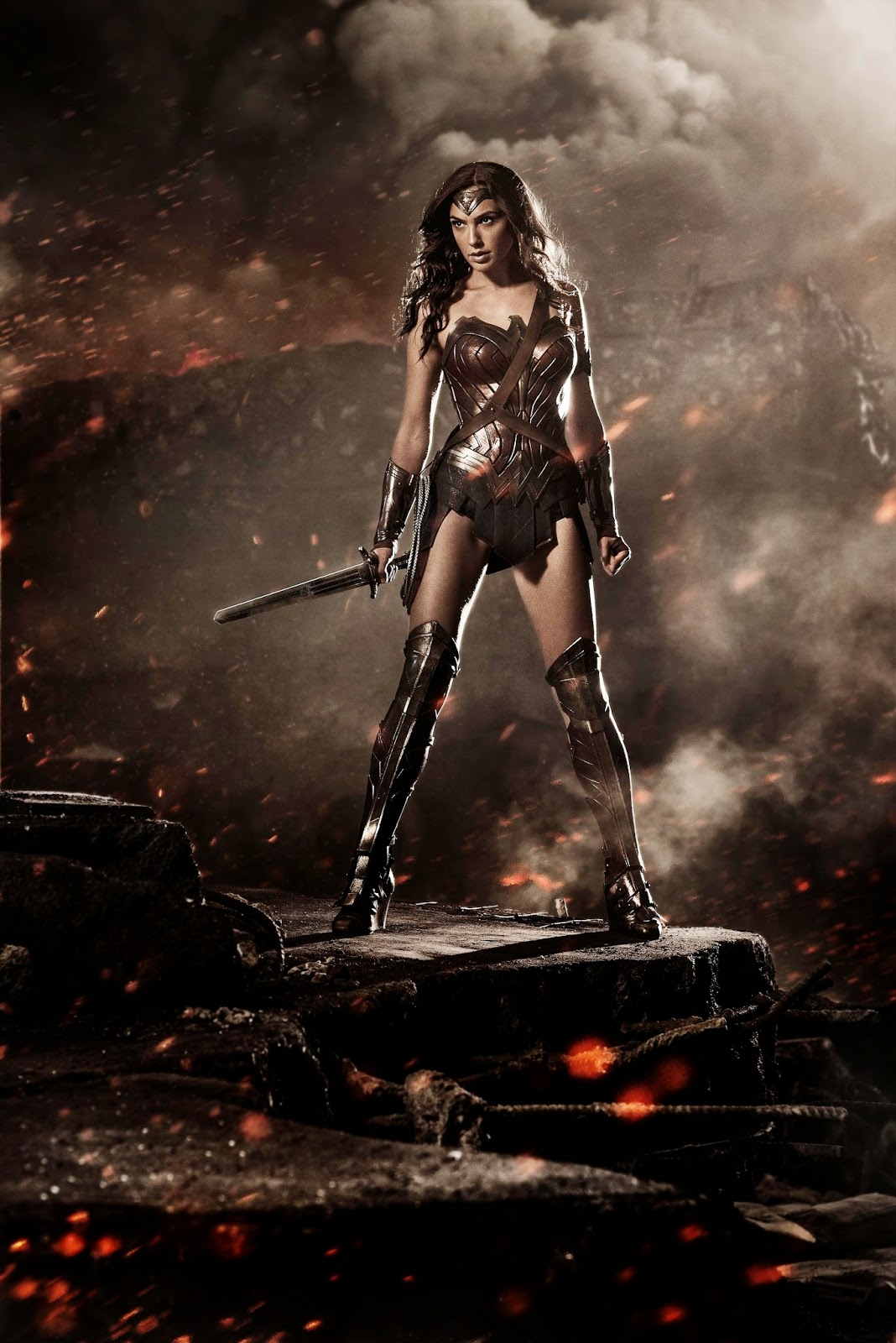


Wonder Woman preparing to stab whoever thought of that movie title

Friday, August 1, 2014

The Leftovers and Staring into the Abyss

WordMaster

            The Leftovers is not feel-good television. Initial reviews described HBO’s new drama as “some of the most desolate, despairing television on air”, “like a French arthouse series, but sadder” and “a show that will make some of its viewers want to slit their wrists” – and those are the positive ones. Perhaps realizing that waxing poetic about a show’s potential to rouse thoughts of suicide isn’t the most effective strategy for convincing people to watch it, many of these critics go out of their way to point out that The Leftovers “isn’t for everyone,” a qualification that seems not only unnecessary (nothing is “for everyone”) but also counterintuitive. If you like a piece of art, why discourage others from giving it a shot? Since when were critics responsible for accommodating audience opinions rather than simply articulating and trusting their own?

            More to the point, though, framing the show’s sorrowful mood as a caveat is like saying, “Mad Men is good, but there’s so much talking”. You’re disowning something essential to the work in question, turning its greatest strength into a negative. Precisely what gives The Leftovers its power is its commitment to exploring human emotions in all their raw messiness, its refusal to settle for false uplift and easy answers. To be sure, some people may find it too unpleasant to watch, and that’s fair enough, but for me (and, judging by the reviews, many others), it’s not a ponderous, soul-crushing exercise in mental fortitude so much as a pitch-perfect falsetto, hitting that elusive sweet note with such exquisite precision it stings. In it, I found something I hadn’t known I was yearning for: a complex, heartfelt portrait of loss.

The moment I fell in love

Wednesday, July 30, 2014

It's Moments That Seize Us

WordMaster


            When describing something like Boyhood, Richard Linklater’s attempt to capture the experience of growing up in something resembling real-time, it’s easy to toss around hyperbolic terms like “brilliant” and “tour de force” – and even easier to get swept up in them. With something this ambitious and experimental, you walk into the theater expecting your life to be altered, your mind opened to new, profound insights into the human condition, whatever that means. To tell the truth, though, Boyhood is nothing like that. Just as Terrence Malick’s The Tree of Life didn’t reveal the meaning of the universe, Boyhood doesn’t shed light on any mind-blowing secrets about coming of age in contemporary America. It is, in fact, rather ordinary.

            The boy in question, named Mason Jr. and played by neophyte actor Ellar Coltrane, is no one special. He’s white and able-bodied, gradually evolving from a fresh-faced kid into a gangly teenager with a pierced ear, possessing few exceptional qualities except a penchant for photography and moody philosophizing. The 12 years of his life covered by the film (compressed into a nearly three-hour running time, which feels surprisingly like nothing at all) contain little that could be categorized as action and follow only the ghost of a narrative structure, not rising toward a climax so much as meandering around one. Even the most ostensibly sensational events, such as Mason’s strained interactions with his two alcoholic stepfathers, are conveyed through the dispassionate gaze of a documentarian. Although it offers an intimate look at the everyday existence of its protagonist, the movie never really allows us into his head; we merely observe, never experience.

            Deprived of the visceral immediacy I had been anticipating, I couldn’t help but feel somewhat let down at first. What I thought would be a joyful celebration of youth instead turned out to be a rather depressing reminder of how boring reality is, delivered from the perspective of someone I found neither relatable nor particularly interesting (especially as an adolescent, Mason is a quintessential Linklater character: wistful, talkative, laid-back and in love with his own thoughts). Once my initial reaction faded, however, it dawned on me that I was supposed to feel that way. Boyhood isn’t about catharsis; it’s about numbing, the sinking realization that this is it, this is life, and you have no idea what to do with it.

            If that sounds like a downer, it is. Yet it’s also strangely captivating, unfurling with a dreamy, leisurely serenity that mirrors its Texas backdrop, not bowling you over with emotions so much as letting them sink into you and creep beneath your skin. Bereft of shocking revelations, turning points and anything else resembling a major plot twist, Boyhood revels in details – gestures, pop culture references, objects, places rendered with such evocative specificity it feels like you’re wandering through a memory. For example, when Mason accompanies his mother (Patricia Arquette in a performance revelatory for its quiet poignancy) to her college psychology class, he sees the professor put his hand on her back, and we instantly understand the implications of this tiny, seemingly casual act. Linklater is predominantly known for his dialogue, and to be sure, there’s plenty of it here, but he also puts on a clinic in how to impart information by showing rather than telling.

            In the hands of almost any other director, Boyhood might have ended up as little more than a curiosity, its unconventional filming style elevating a fairly conventional teen movie plot (alcohol-soaked parties? Check. Short-lived romances? Check. Heart-to-heart conversations about the future? You’re damn right check). But with his naturalistic direction and subtle script, Linklater infuses the proceedings with a sense of sincerity that most coming-of-age films lack, eschewing shallow nostalgia and familiar clichés in favor of something messier and more honest. Furthermore, anyone who dismisses the premise as a mere gimmick would be mistaken. On the contrary, it’s the entire point. Life, according to Boyhood, is basically meaningless; there’s no grand master plan, no higher purpose to the series of arbitrary benchmarks we pass on our way to death (to paraphrase Arquette in the movie’s most haunting scene). What make it all worthwhile are the little things, the fragments of time between benchmarks when you forget about the inevitability of mortality and the impermanence of things. Life is about the clear sunset that greets you after a long hike, the song you hear on the car radio, the near-infinite number of seconds that tick by as you debate whether to kiss the girl sitting next to you. It’s about the moments that are there and then, before you know it, gone.


Links:

Thursday, July 17, 2014

I, For One, Welcome Our New Ape Overlords

StarGazer


       Tragic blockbusters are fascinating. Since we as audiences have become so accustomed to summer popcorn flicks wrapping up with the hero defeating the monster, saving the world and getting the girl (because, let’s face it, the hero’s pretty much never a girl), the few that enter darker territory often seem to merit extra attention simply for their willingness to break from the long-held assumption that crowds can only be pleased by happy endings. What makes the Planet of the Apes franchise so peculiar, other than its shocking longevity, is that, as critic Matt Zoller Seitz asserts, it has always been inherently bleak. From the moment Charlton Heston laid eyes on that partially-buried Statue of Liberty at the end of the original 1968 film, humanity was doomed, and if any later additions or reiterations deviated from that pessimistic viewpoint, it would feel false, incompatible with the rest of the canon. It’s not just the apocalyptic, if rather ludicrous premise that makes these movies inevitably tragedies; it’s because, even in creating a universe where apes rule the world, they still paint humans as the ultimate monster, catalysts of their own downfall.

        Dawn of the Planet of the Apes, the latest installment to the simian-obsessed series, continues in that despairing tradition. Set ten years after 2011’s similarly awkwardly-titled Rise of the Planet of the Apes, which showed how apes became hyper-intelligent and introduced a deadly virus that quickly spread across the globe, Dawn finds civilization in shambles as a handful of survivors hole up in San Francisco, unable to connect to any other communities that could possibly have sprung up, while the group of apes led by Caesar has thrived on land that’s been reclaimed by nature. Naturally, the two societies eventually discover each other and come into explosive conflict. Given that audiences have known the conclusion to this story for nearly half a century, it would’ve been easy for both of these movies to fall into the usual prequel trap, where the predetermined outcome prevents current events from having any real weight. While most prequels make do with lazy writing that simply goes through the motions, Rupert Wyatt’s Rise presented a coherent narrative – something that’s appallingly hard to come by in modern blockbusters (talk about setting low standards) – that was not only fun to watch unfold, but also seemed interested in telling a new story, rather than merely setting up for an old one. Despite changing directors, with Let Me In’s Matt Reeves now at the helm, Dawn seamlessly transitions from and builds off of the solid foundation established by its predecessor, taking advantage of the fairly large time jump to mine different creative ground without losing the blend of epic scope and intimate focus that made Rise successful. It offers an equally thrilling, unexpectedly contemplative look at what happens when brute force triumphs over compassion, the consequences of historical violence, and the meaning of family, community and home.

Thursday, July 3, 2014

A Year of Antiheroes and Finding Light in the Darkness

StarGazer

        People too often confuse cynicism for moral complexity. Challenging an audience’s capacity for empathy or their flexibility where ethics are concerned can produce some fantastic, intellectually and emotionally stimulating art, but declaring that human beings are horrible and life sucks isn’t inherently interesting, especially if everyone else is screaming the same thing. Great TV – or rather the shows that typically attract that label – still tends to be bleak and troubled; the apocalyptic HBO drama The Leftovers, which premiered June 29 with one of the most promising but soul-crushing pilots I’ve ever seen, should fit right in. However, I’d argue that what separates not only the good prestige TV from the bad, but also the new from the old is its ability to craft distinct yet nuanced and thoughtful worldviews, ones that complicate typical good/bad, optimistic/pessimistic binaries. Shows like True Detective and Fargo in particular felt like responses to the Machiavellian brutality of Breaking Bad and The Shield. They indulged in the same tropes even as they critiqued them and, by adding this layer of introspection and self-awareness, pushed TV as a whole in a different, exciting direction.

“The world needs bad men. We keep the other bad men from the door.”
-          Rust Cohle (Matthew McConaughey), True Detective

        That was possibly the second most quoted line by True Detective’s idiosyncratic, existentially fraught protagonist, just behind the one about time being a flat circle, but it could easily be put in the mouths of any of the corrupt cops and destructive antiheroes who populated the past decade of TV. More than anything else, these stories revolved around the idea that evil can only be defeated if people are willing to lose – or at least temporarily discard – their humanity in the process.

        It’s not hard to understand the appeal of these disillusionment narratives. They contain ample amounts of both external and internal conflict and are pretty much obligated to focus on a complicated, unpredictable protagonist, even if too many writers mistake glowering machismo for charisma. Imbued with a sense of paranoia that forebodes an inevitably tragic conclusion, these stories reflect and speak to a world that feels constantly on the verge of exploding, a reality defined by economic crises, global conflicts and power struggles, and environmental disasters. They tell us that the institutions we rely on are broken and corrupt, that the idealized heroes we’re forever waiting on will never show up, that human beings are heartbreakingly, almost irredeemably flawed. As depressing as that sounds, there’s something comforting about art that confirms our doubts and fears, just as it can be cathartic – or, at least, beguiling – to follow characters who don’t feel bound to the same legal and ethical codes as the rest of us. It’s no coincidence that antiheroes are almost exclusively white men, not just because that demographic is by far the most represented in media in general, but because they have traditionally been accorded more power in Western societies and, therefore, are allowed more freedom to flaunt the rules. The best shows, like Mad Men with its Great Gatsby-esque deconstruction of the American Dream, interrogate the notions of strength, dominance and entitlement associated with whiteness and masculinity, instead of merely glorifying or reveling in it.

Tuesday, July 1, 2014

Death, Taxes and Community

WordMaster

            Yesterday was not a particularly good day. First, the Supreme Court of the United States ruled in favor of Hobby Lobby, essentially stating that corporations are allowed to refuse birth control coverage for female employees due to religious objections. Then, Noah Berlatsky, a writer I’d previously respected, published an article in The Atlantic arguing that Orange Is the New Black doesn’t pay enough attention to men, despite the fact that the show is set specifically in a women’s prison and therefore has no reason to represent male convicts (if anything, I wish it didn’t care so much about its male characters, but that’s another discussion entirely). And as if that wasn’t enough, Community got renewed by Yahoo! (yes, that Yahoo!) for a last-minute sixth season.

For many people, the revival of NBC’s beloved cult comedy, following its cancelation earlier this year, is a cause for celebration. But when I saw the news, I felt a jolt of irrational exasperation. Of all the acclaimed, prematurely axed shows, from Terriers to Enlightenment to this season’s Enlisted, why is this the one that gets a second chance?

            Once upon a time, I did genuinely like Community. Although many fans consider the first season the show’s weakest, I’ve always had a soft spot for its zany, idiosyncratic, relatively unassuming brand of humor interspersed with moments of surprising sweetness (I might or might not have cried during Abed’s family reconciliation video). Season two earned its hype with consistently hilarious episodes that delighted in subverting sitcom conventions, pop culture tropes and audience expectations without abandoning its characters (see: “Mixology Certification”, “Critical Film Studies”, etc.). I was as anxious as anybody waiting to see how long it would survive despite middling ratings.

            The third season started out uneven at best, though episodes like “Remedial Chaos Theory” and “Foosball and Nocturnal Vigilantism” were enough to keep me invested. It wasn’t until some vague point after the infamous 2012 hiatus that I realized I didn’t enjoy Community anymore; in fact, the show was actively getting on my nerves. Where the meta commentary and obscure references once felt fresh and clever, they now came across as smug, trite and self-indulgent, and where the madcap energy had once been balanced out by a commitment to emotional realism, it now veered into outright chaos, as if Greendale had been transported from a parallel dimension to a completely separate universe where the basic rules of narrative structure and logic no longer existed. I hated everything the show did with Britta, from pairing her with Troy to gradually dumbing her down. Most people approved of the change as far as I could tell, but personally, I’d rather have the intelligent, idealistic, if self-serious Britta of season one than the walking, talking blonde joke of season three. It bothered me how the other characters treated her, constantly making fun of her values and telling her to be quiet; the “fun vampire” quip was amusing until it occurred to me how closely it mirrored the way feminists and other social justice advocates are viewed in real life, dismissed as humorless extremists trying to ruin everyone else’s party.

 Don’t even get me started.

Sunday, June 15, 2014

Let's Talk About the Children: War and the Loss of Innocence in Game of Thrones

WordMaster


            When watching Game of Thrones, HBO’s contentious, wildly popular fantasy series, it’s easy to get caught up in the Big Moments, the ones that light up social media and generate a week’s worth of think pieces: Ned Stark’s beheading; the Battle of Blackwater; the Red Wedding; so many deaths. But the show isn’t all about shock and awe. In fact, some of the best, most memorable moments this season have been the quiet ones, often involving nothing more than characters talking. There’s the circuitous beetle-crushing anecdote that Tyrion tells Jaime in “The Mountain and the Viper,” delivered with tortured intensity by Peter Dinklage, just before the climactic, explosive duel scene. Daenerys’s flirtation with Daario in “Mockingbird.” Any scene between Missandei and Grey Worm, whose tender relationship is perhaps the show’s most welcome addition to George R.R. Martin’s novels.

            There’s a reason why, even in a season teeming with game-changing, water-cooler-ready incidents, “First of His Name” remains my favorite episode. Although relatively uneventful, it contains a wealth of perfect little moments that might seem inconsequential on the surface, but actually have profound implications for the characters and their world. Take, for instance, the scene where Podrick Payne confesses to Brienne, “I killed a man.” It’s a simple, four-word line, but for a character that had previously functioned as little more than comic relief, it constitutes a miniature, heartbreaking revelation. Pod may be hopelessly earnest and awkward, but he’s far from the naïve simpleton we and Brienne thought he was; despite his lack of formal training and experience, he’s just as capable of taking a person’s life as a knight of the Kingsguard.

            At its heart, season four is a narrative of disillusionment, watching as each character is deprived of his or her innocence. In the premiere, Arya Stark, not yet a teenager, sticks her newly reclaimed Needle into Polliver’s throat to avenge her friend, Lommy Greenhands. A contemptuous smirk lingers on her face even as her victim chokes to death on his own blood, yet whatever catharsis this death brings is only temporary. Arya doesn’t hesitate to revel in her victory; instead, she simply wipes her sword clean and continues on her journey with the Hound. In an interview, Maisie Williams says that Arya is “being eaten from the inside out… She's got a hole in her heart. She fills it with all these eyes that she's going to shut forever, and she's just turning black from the inside out.” Ultimately, killing Polliver is not the act of a girl obtaining justice for her fallen friend; it’s the act of a girl who has lost – or is in the process of losing – her soul. A deliberate, cold-blooded murder, devoid of feeling, performed with matter-of-fact calmness. With this, Arya has officially been indoctrinated into the culture of violence that reigns over Westeros.