Pages

Tuesday, May 28, 2013

Star Trek Can’t Quite Escape its Predecessor’s Shadow

StarGazer


        J.J. Abrams’s 2009 reboot of Star Trek is, for me, the ideal blockbuster. It develops characters who are charming and utterly worthy of the audience’s attention and sympathy and allows them to drive the action sequences, which are, while not particularly innovative, at least not mind-numbingly tedious and carry actual weight. Just look at that heartbreakingly brilliant opening scene as evidence that the filmmakers’ understood the rich power of emotion, even in a movie stuffed with CGI, and the importance of making an audience feel before they can be expected to care. Eschewing the notion that escapist entertainment must be brainless and without substance, the film satisfies the heart, mind and pulse, appealing to both diehard Trekkies and franchise virgins like me, to those who simply want to relax and those looking for real quality in their popcorn movies. A sense of fun, lovable characters, excitement and an honest emotional core? What more could you possibly want? Abrams’s sequel strives to find that same delicate balance, but while Star Trek into Darkness is an enjoyable enough flick as it stands, it falls short of the expectations set by the original.

        In a way, the return of Captain Jim Kirk, Spock and crew falls prey to Hollywood’s “bigger is better” mentality, though it suffers from this less so than something like, say, Iron Man 2 or any number of other blockbuster sequels.  With the protagonists’ origin story taken care of, Abrams tackles a more expansive, ambitious plot that focuses less on his characters’ personal growth and relationships and more on external conflicts. This isn’t to say that they completely ditched the character-centric emotionality that highlighted the original, but rather, that the quieter, more dramatic moments scattered throughout have less breathing room and feel more like segue ways from one action set piece to the next, making the proceedings seem rushed and overly hectic. Covering themes of violence and revenge, loyalty and sacrifice, leadership and responsibility, not to mention the usual intuition/logic dichotomy inherent to Kirk’s and Spock’s relationship and an overt but relatively basic 9/11 allegory, the film bursts at the seams with a variety of ideas but doesn’t take or have the time to explore them as thoroughly as it could have. A couple of twists that I won’t describe here and shifting further complicate matters, and certain characters’ motives aren’t always clear, making it seem like some events happen just because the movie needs them to, rather than being causally linked to each other. Perhaps a repeat viewing would clarify some issues, but the convoluted, bloated narrative stands in stark contrast to the stripped-down simplicity of the previous movie.

Tuesday, May 21, 2013

Iron Man 3 Has the Fuel but Never Catches Fire

WordMaster


           Way back in May 2008, Jon Favreau directed a little movie called Iron Man that heralded the beginning of a full-blown pop culture phenomenon. With its effortless mix of lighthearted wit, relentless energy and flashy visuals (not to mention a star performance from Robert Downey Jr.), Iron Man went from a mildly anticipated flick featuring an “obscure” Marvel superhero and a bad trailer to a box office triumph that remains among the best superhero movies ever made. It’s no coincidence that the one-two punch of Iron Man and The Dark Knight launched the current obsession with men in tights: they both showed that superhero movies don’t have to be blandly cartoonish fan service; they can have life and character of their own. If The Dark Knight was gritty, nihilistic and politically charged, then Iron Man was fresh, mischievous and just all-around cool, the James Bond of superhero blockbusters.

           It’s too bad, then, how quickly the genre seems to have gotten worn out. 2012 gave us three, in my opinion, solid-to-good superhero movies with The Amazing Spider-Man, The Avengers and The Dark Knight Rises, but none of them were necessarily special or groundbreaking. Even Rises, my personal favorite, is exceptional mostly because it gave the landmark trilogy a satisfying, appropriately ambitious conclusion. Weirdly enough, the most unique of the three is arguably The Amazing Spider-Man, which seemed more interested in angst and romance than action (not to say it didn’t have a fair dose of explosions and CGI), though the tonal shifts were only intermittently successful. The bottom line is that none of the new entries into the genre have managed to live up to the expectations set by Iron Man and The Dark Knight.

           Iron Man 3, the third and potentially last installment of the franchise, epitomizes this growing superhero fatigue. Although not terrible by any means, it is, with a few exceptions, profoundly mediocre and generic, showing few signs of even aspiring to be something greater than an obligatory franchise sequel and summer tent-pole. The disappointing part is that buried beneath the convoluted plotline and seemingly endless action sequences are the seeds of a compelling, even inspired movie.

Thursday, May 16, 2013

The Office Finally Comes to a Bittersweet End

StarGazer


        2013 has been a tough one for me on the TV front so far. Sure, the midseason premieres birthed a handful of promising new shows, like Hannibal, The Americans and BBC America’s Orphan Black, that I might enjoy once I actually get around to checking them out, but the casualties have far outweighed the new recruits. In addition to Fringe and 30 Rock ending in January, ABC unsurprisingly canceled Happy Endings, whose virtues I extolled in my last blog post, and two of the other shows I recently discovered – The Hour and Enlightened – were also given the boot. That’s not even counting shows I don’t watch, like Dexter and Breaking Bad, which are both airing their final seasons over this summer. Yet, arguably no show’s impending absence will be more deeply felt by more people than The Office. After an astounding nine seasons, the NBC workplace comedy mainstay, the show that broke new ground for American sitcoms with its single-camera, mockumentary approach and paved the way for such hits as Parks and Recreation, Modern Family and perhaps even 30 Rock, is at last going off the air forever with a one hour series finale at 9 P.M. tonight.

        Unlike with the ends of Fringe and 30 Rock or the cancellations of those other shows, the close of The Office doesn’t particularly sadden me; in fact, it feels more like a relief, like when you finally leave your dead-end job so you can set off and do what you really want to do with your life. Let’s be real here: it’s been a good long while since The Office was actually, genuinely worth watching. At its best, the show was hilarious and relatable with moments of real poignancy to balance out the sometimes almost painful awkwardness, but somewhere around season 5, it took a nosedive into mediocrity and, like most TV shows, especially sitcoms, that last for more than a few seasons, gradually turned into a tired shadow of its former self. Still, while it’s no longer at its best and probably should’ve ended much sooner, The Office was a hallmark of modern television, and when the doors of Dunder Mifflin close for one last time tonight, it will feel like the end of an era.

Friday, March 29, 2013

10 Reasons to Watch Happy Endings

StarGazer


       ABC has become the new NBC. A year ago, the peacock network infamously jerked around the cult favorite TV show Community by putting it on indefinite hiatus, then bringing it back and renewing it for a fourth season, only to fire its creator and creative mastermind Dan Harmon and push back its premiere from an already-late October date to February. The network’s behavior displayed an open disregard for fan opinion and the show itself and with brand new show-runners on board, it apparently just hasn’t been the same, though personally, I think the show dropped off well before Harmon left and NBC started messing with its schedule.

       How does this relate to ABC? Well, let’s start with a show called Don’t Trust the B---- in Apt. 23. Starring Krysten Ritter as a con-artist and party girl in New York City who strikes up a unique friendship with her new roommate, it was supposedly a pretty damn good show, albeit with a small fanbase, and had started to hit its stride when ABC abruptly, though not unexpectedly, pulled it from their schedule with eight episodes left in the season, announcing that it was officially canceled not long afterwards. To be fair, the show had pretty ugly ratings, but what do you expect to happen when you not only air episodes out of order, but multiple seasons simultaneously?  The cancellation of Apt. 23 naturally prompted fears regarding the fate of its constant Tuesday night companion, the slightly-higher-rated and excellent Happy Endings. Like Apt. 23, the kinda-sorta Friends-esque comedy aired episodes out-of-order (including having a “lost” episode) and has experienced a roller-coaster ride when it comes to scheduling, frequently getting preempted or yanked for little apparent reason, adding an additional timeslot in the same week, airing multiple episodes a day and getting cut out of the March schedule to make room for Dancing with the Stars. Eventually, the show mysteriously vanished from TV after its back-to-back January 29th episodes before the network finally told everyone that it had been moved to Friday nights (a.k.a. where TV shows go to die) in favor of reality shows Celebrity Wife Swap and The Taste and wouldn’t be returning until March 29th.

        I understand that TV is a business, and the networks can only be expected to do so much when a show does pulls in crappy ratings; one silver lining of NBC being so incompetent they can’t even beat Univision anymore is that shows like Community, Parks and Rec. and even 30 Rock, when it was still around, have likely only survived for as long as they have because there isn’t anything better to put in their place, and at least they have hardcore, devoted fans. I get the sense, though, that ABC might not be quite as patient or have such low standards. The fact that the network has started a “save the show” campaign (either a comforting or cynical move, depending on how you look at it) and that it’s only one season away from syndication gives me some hope that Happy Endings might get one last renewal, but if more people don’t start tuning in, which seems unlikely to happen given the timeslot, it’s headed straight toward cancellation.

        If you’re one of the many, many people who hasn’t seen Happy Endings, you should know that it’s an ah-mah-zing show. Revolving around a group of friends in the nicer side of urban Chicago, it brings consistent laughs and features one of the best (and most unheralded) casts in any comedy – or any kind of show, for that matter – working on TV today. Even better, it’s never too late to jump on the bandwagon, and its return at 8:00 PM EST tonight provides a perfect opening for newcomers. So, without further ado, here are ten reasons why you should tune in (I apologize in advance for the wall of text):

Tuesday, March 12, 2013

Looking Ahead: The 2013 Movie Season

StarGazer


        It’s that time of the year again, folks! 2013 has entered its third month, and while some may already be sick of this calendar year (President Obama, prominent and respected athletes, dying rich people), for most of us, it feels like it’s just getting started. What better way to get excited for this year than to take a look at all the tasty cinematic treats lying in store for us? Spring looks like a barren wasteland as usual, but once you hit May (or even April, if you’re feeling optimistic), there should be a ton of awesome films coming your way. Because everyone on the planet probably already has the big blockbusters circled and bolded on their calendars (Star Trek Into Darkness and The Hobbit: The Desolation of Smaug are my two personal must-sees), it seems only proper to shine a spotlight on some promising and intriguing movies that might not be on your radar yet:

Elysium
Release Date: August 9
Plot: According to IMDb, Matt Damon is a man on a mission for equality in a future (the year 2159, to be precise) where the wealthy now dwell in a space station, leaving the rest of humanity to live out their no-doubt miserable lives on a ruined Earth.
Why You Should Pay Attention: Okay, fine, this movie isn’t exactly going to sneak up on anyone, but it’s not as much of a sure-fire blockbuster juggernaut as, say, Iron Man 3 or Catching Fire, so it still seems worth mentioning here. Directed by Neill Blomkamp, whose first feature-length film District 9 was a surprise commercial hit and got a wholly deserved Best Picture nomination back in 2009, this sci-fi thriller sounds like it’ll be along the same lines. Hopefully, this means we can expect some gritty, gruesome action scenes, a decidedly realist/documentary-like filming style and an intelligent storyline that uses its high-concept premise as a parable for real-world, topical issues – in this case, the significant wealth gap in between the haves and have nots. It also gives us the immensely talented trio of Matt Damon, Jodie Foster and District 9 breakout Sharlto Copley. If Blomkamp’s second offering is as smart, original and entertaining as his first, then Elysium should be well worth the four year wait in between.

Besides, Matt Damon wouldn’t go bald for just any movie, right?

Monday, March 4, 2013

The Lady in the High Tower

WordMaster


             To put it lightly, this has been a rough time for feminists. Yes, we have made significant progress since the Mad Men Era (aka the 1960s, when people still legitimately believed that schizophrenia and autism were caused by negligent parenting), but misogyny remains sadly prevalent in our allegedly post-feminist society, as evidenced by various recent events. First, there was the Sandra Fluke-Rush Limbaugh controversy, which really hasn’t gotten any less infuriating over time. Then, we had the even more B.S. “legitimate rape” comments from (ex-)Missouri Senate candidate Todd Akin and this quote from author Bret Easton Ellis, among various other sexism-related controversies. And just last week, the Oscars were greeted with outrage over host Seth MacFarlane’s intentionally provocative “We Saw Your Boobs” bit, in which an all-gay male choir sang about female nudity in movies.

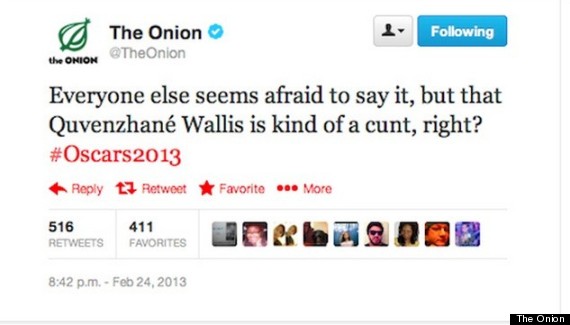
             I could fill a novella with my feelings about the reaction to MacFarlane’s joke, which, in all honesty, bothered me infinitely more than the joke itself. Don’t get me wrong: “We Saw Your Boobs” is of questionable taste at best, and if anything, the response to it shows that it failed to get across whatever satirical point MacFarlane was trying to make. But maybe because I’ve watched way too many talk shows (where this brand of comedy is more or less the norm) or maybe because, even though I don’t care for his work in general, I genuinely wanted MacFarlane to succeed as Oscar host (partly since everyone else, for whatever reason, wanted him to fail), I can’t force myself to share the sense of moral indignation that lit up the Internet after the ceremony. Were some of the jokes offensive? Probably. Did all of them land? Definitely not. Worst Oscar host ever? Do you even remember James Franco and Anne Hathaway? This is a textbook example of the penchant for hyperbole that characterizes the Internet Age – everything is either the best thing ever or a crime against humanity, and everyone is either a “perfect human being” or an insufferable dickwad. Although I would never deny anyone’s right to be offended, at a certain point, I feel like you have to be able to say, “That was distasteful” and move on - or at least provide some insightful, introspective commentary to go along with your self-righteous moralizing. Personally, I would rather spend my time ranting about the aforementioned Sandra Fluke episode or even the ludicrous comments that have been made about Best Actress nominee Quvanzhané Wallis (one of which was, to be fair, followed up by a rare public apology that actually seems sincere), but then again, I'm not going to stop people from expressing their own thoughts and opinions.